Jealous guys

Can anyone tell me why a small minority of birders insist on being possessive of the birds that they find and generally uptight about sharing information with other birders?
Over the past couple of years I have come across a couple such characters. In truth, I find it very depressing when I come into contact with negativity and narrow mindedness. For me, birds are for everyone to share and are certainly not possessions or objects to claim glory from. As a kid, I occasionally had to deal with people reluctantly grunting responses to birding questions put to them. I even had people turning their backs on me when I approached them, but luckily even at that tender age, I realised that those people were to be pitied.
Thankfully, the vast majority of birders are generous with both their experiences and knowledge – key elements needed in order to enthuse the up and coming birders. Please keep spreading the knowledge.
Rant over. Now, what was I doing……….


Play misty for me

The Scrubs at 6.30am
The Scrubs at 7.30pm
And that was all I saw this morning!

Kingfisher surprise

Kingfisher (Peter Hewitt)
This morning I traipsed down to The Scrubs primarily to be interviewed by the author of a forthcoming book on urban gardening. She wanted to write a chapter on urban birding hence her meeting with me.
I was walking her around my patch giving her a very basic breakdown on urban birding when I noticed four birds at fairly low altitude heading towards me from the south. For a split second I thought that they were four more of the fairly common Feral Pigeons that had been pretty prevailant in the grey skies. That hunch was instantly dispelled when I realised that they were indeed waders. As they flew overhead I heard them give flutey whistles and I realised that they were Grey Plovers. Result! Our fourth ever record!
Still reeling from that discovery, five minutes later I noticed a small bird dart past us barely a foot above the football pitches making a serious beeline north. It was a Kingfisher!! Again, our fourth record. What are the chances of a Kingfisher flying over bone dry land during reasonable weather? Perhaps they do it all the time and we never notice?
One thing’s for sure; anything can turn up anywhere at anytime!

The Cock of the Rock, King of the Hill, Muscle in Brussels

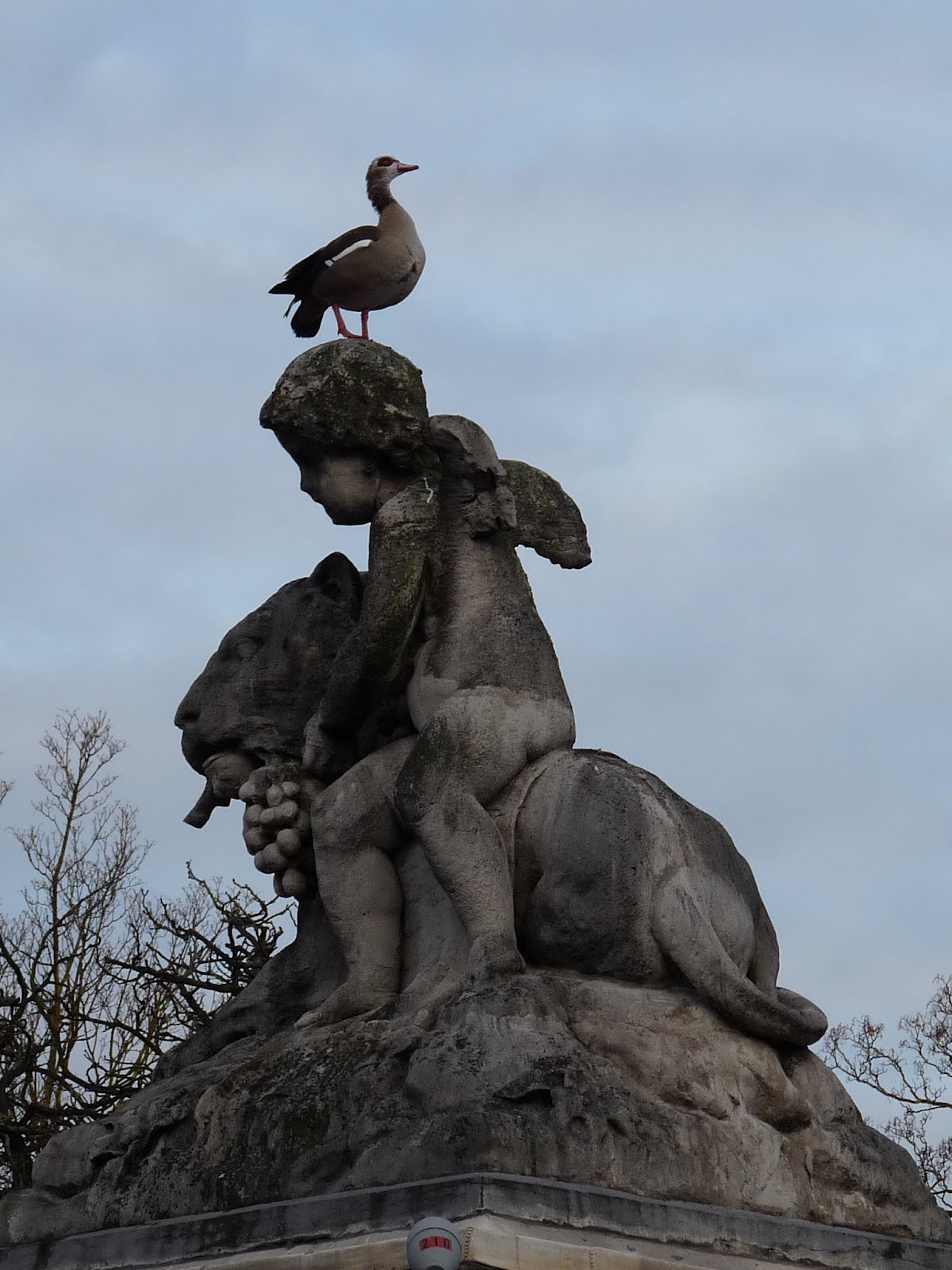
Egyptian Goose in Brussels (Stephen Boddington)
Last weekend I made an impromptu visit to Brussels for some urban birding at the invitation of Stephen Boddington, an ex-pat who has lived in the city for the past 14 years.
I always imagined the city as a grey concreted rainy business centre. I had only been there once and that was a driveby scenario around 12 years years ago. My feeling then was to keep driving. This time around I was surprised as to the amount of species to be seen within the city limits. Marsh Warblers breed, White Stork and Common Crane migrate around the city and Peregrines breed within the city.
Stephen and I saw a good range of birds on our Sunday drift around the city using public transport. A single Goshawk drifting over, several Middle Spotted Woodpeckers, a possible Black Woodpecker heard drumming, Short-toed Treecreepers and Marsh Tits were the best of the bunch plus a ton of delightful Red Squirrels.
Brussels was not my favourite city mainly due to the intense dislike that the Dutch and the French inhabitants have for each other – which even permeates into the birding scene. Having two seperate birding websites – one French and the other Dutch – that don’t cross-pollinate with each just seemed utterly ridiculous to me.
Despite that, Brussels is worth a second look if you find yourself there.

Gosforth Park Nature Reserve – saved!

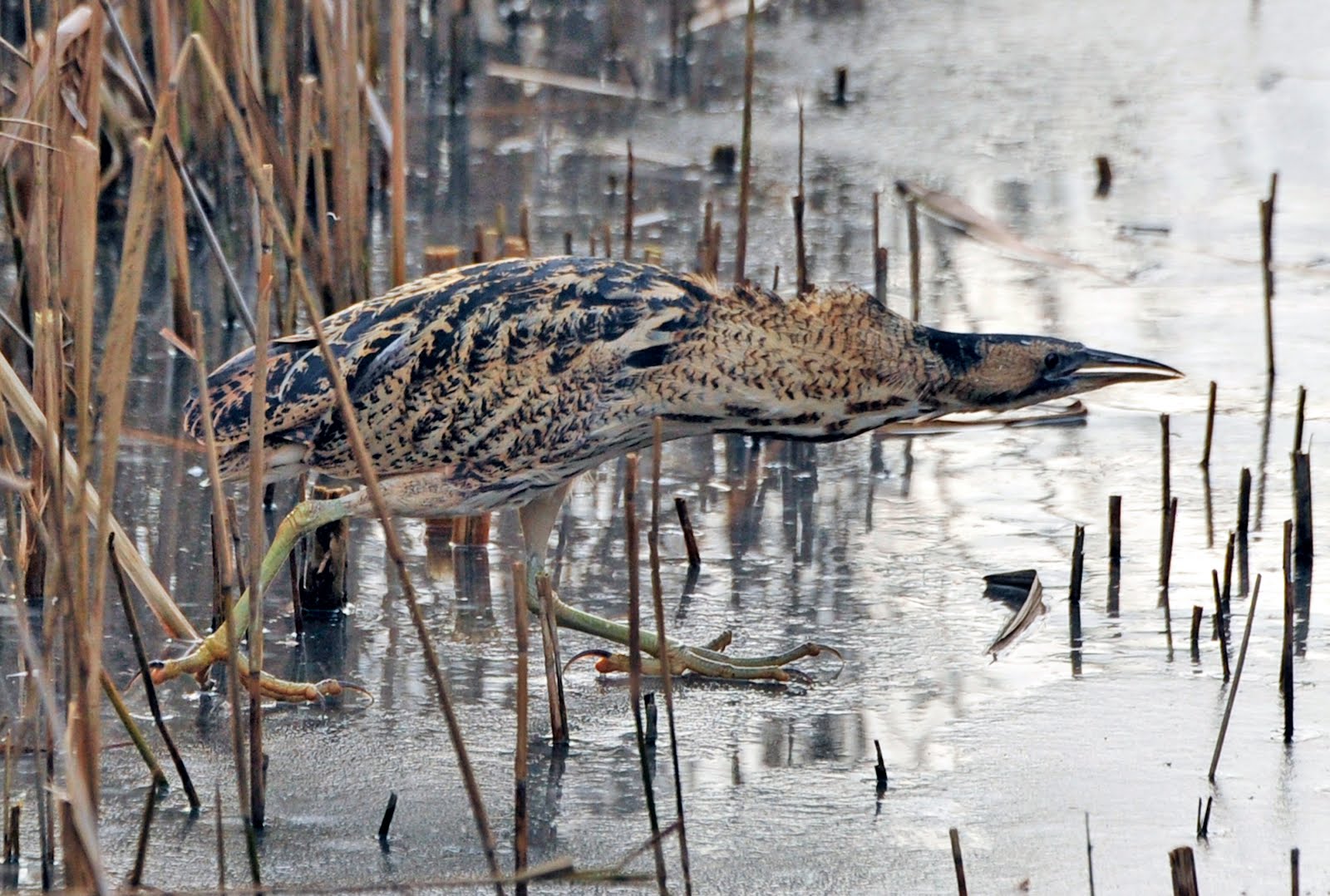
Eurasian Bittern (Russell F Spencer)
In November last year I visited Gosforth Park NR on the outskirts of Newcastle as part of a general scout around the northeast. The thing that struck me about the place was that despite its close proximity to Newcastle it harboured an amazing array of wildlife.
Encompassing 145 acres, its large woodland is home to the only urban population of Red Squirrels in England, several roosting colonies of Noctule Bats as well as Badgers and various interesting species of plant. There is also a lake and large reedbed in which Water Shrew, Otters roam plus a good selection of winter waterfowl can be found and Bitterns are resident. It is a very beautiful and special place.
At the time, it was under intense pressure with the local council concocting crazy plans to develop the green corridor around the site for housing. This would have ultimately destroyed the fragile ecosystem as it would have effectively taken away the feeding areas for much of the wildlife that use the site.
I heard yesterday that the fierce opposition put up by the local people and other concerned organisations were successful in convincing the council that it was indeed a bad idea to develope the sensitive areas and the site has been saved.
It’s so nice to hear such great news. If you ever get the chance you must go and visit this wonderful reserve.

We needed a Chat

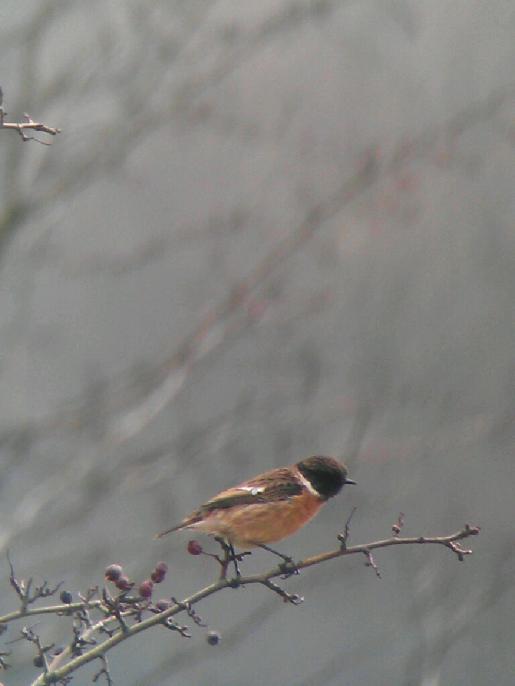
First winter? Male Stonechat (Neville Smith)
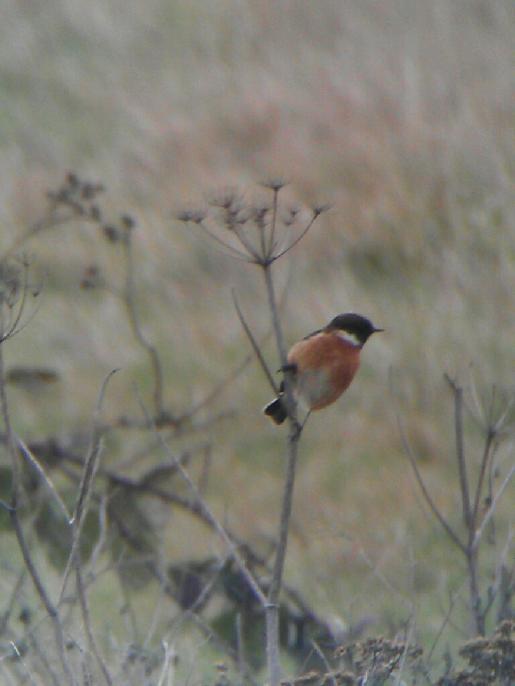
A fine male Stonechat (Neville Smith)
These two beautiful Stonechats were discovered at The Scrubs over the weekend. We presume that they are migrants heading back to who knows where to set up their territories ahead of the returning females.
Stonechats were once regular winterers on my patch with at least three birds on the grassland every day between late October and mid-March. Some years we would have a fall of up to 10 bird birds for a day or two in early October and late March/early April. Those were excellent counts when you consider that the area that they chose to spend their time was not expansive in any way.
Alas, after years of regular birds we sadly lost our wintering chats during the first snowfall of December 2009. Since then, Stonechats have become a real scarcity. Each time we see them is celebrated. Only one male remains now. Let’s hope we get some more before the breeding season begins in earnest.

I can smell the spring!

Tagus Estuary, Lisbon, Portugal
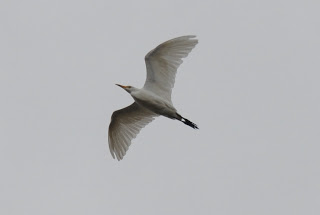
Cattle Egret
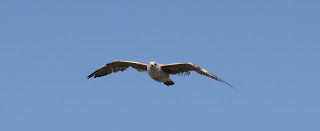
Yellow-legged Gull
The past few mornings at The Scrubs have really been invigorating. The scene is changing in that winter is definitely receding and the resident birds are all displaying and busily singing.
I’m going to have an extremely busy spring with most of it to be spent away from my beloved patch. The first port of call will be Lisbon at the end of March when I will be leading a three day tour for Swarovski Optik around the city itself and the neighbouring Tagus Estuary.
I can’t wait, especially to explore Tagus Estuary again because the place is just buzzing with birds – raptors, Little Bustards, Stone Curlews, waders galore, flamingoes and a myriad of passerines.
Heaven!

Pipits in the meadow

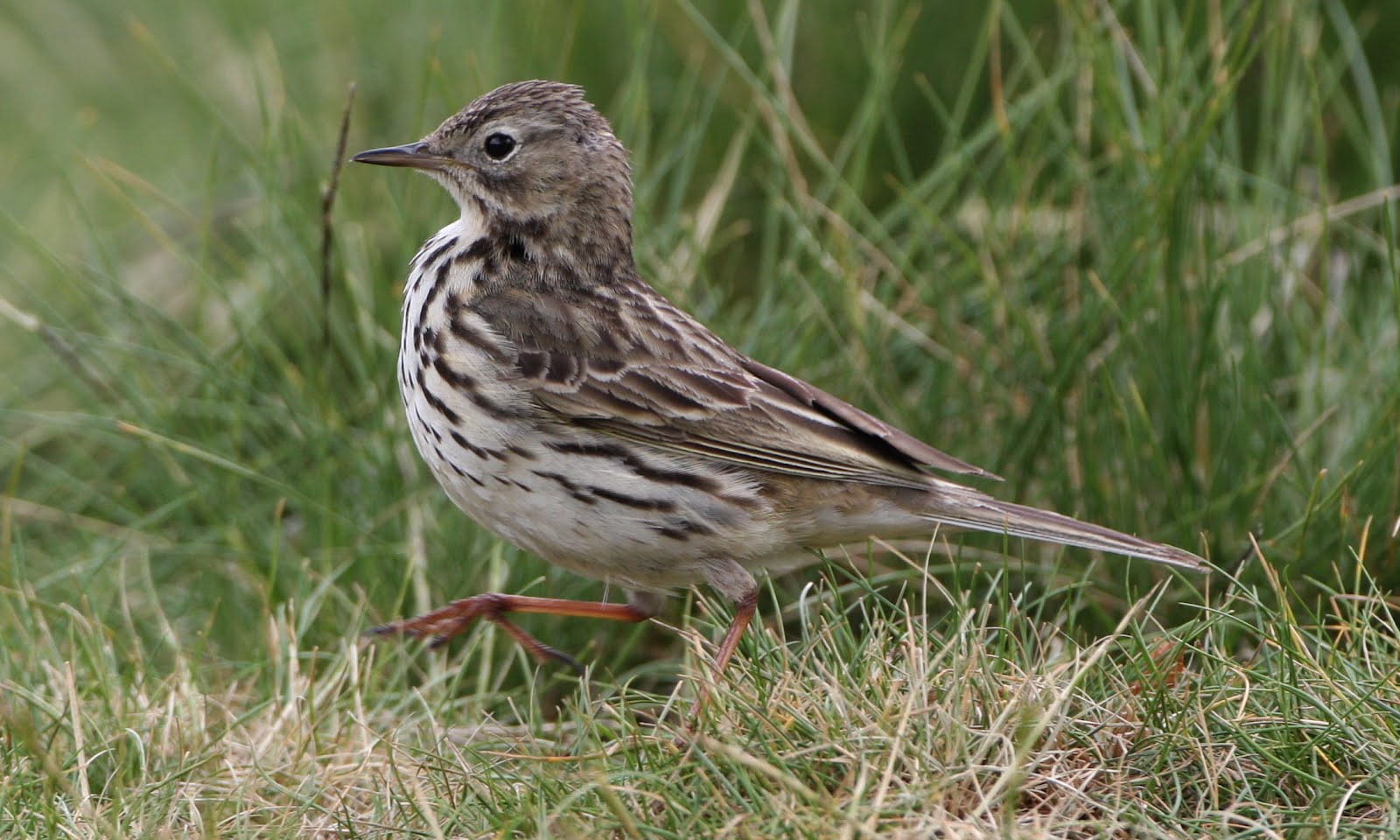
Meadow Pipit (Mandy West)
Nipped over to Wormwood Scrubs, my patch, this morning to check up on the birdlife. The football pitches were still fairly busy with Larids. I counted at least 190 Black-headed Gulls in varying plumages loafing on the pitches. Interestingly, only perhaps three birds were in first winter plumage with majority sporting either their winter dress or appearing to be moulting into their summer brown hoods. Peppered amongst them were at least 35 Common Gulls and again, maybe 60% were adults. Isn’t it curious that there were so few young birds around? Did that reflect a bad breeding season or do the youngsters hang out elsewhere?
I then strolled through our 20 acres or so of grassland in the vain hope of flushing something decent. Over the years I have kicked out cats, moths and a blow-up doll once during the winter months. Bird wise, I have also flushed redwings secreted in the long grass (very unusual, although I have heard that Fieldfares sometimes roost on the ground), a Short-eared Owl (nothing short of amazing for a central London site), regular Snipe and even a Lapwing.
This morning I found a singing male Reed Bunting in a Blackthorn and around 20 Meadow Pipits cavorting around. In the case of the pipits, it is normal for us to start getting a build up around now. By the end of March, four or five males may start their territorial song flights. The fact that we have breeding Meadow Pipits at The Scrubs is pretty amazing because our grassland is not protected and it runs the daily gauntlet of disturbance that includes dogs and their walkers, errant low-flying model aircraft and drifting litter.
Just the usual urban hurdles that wildlife have to cope with.

Glasgow

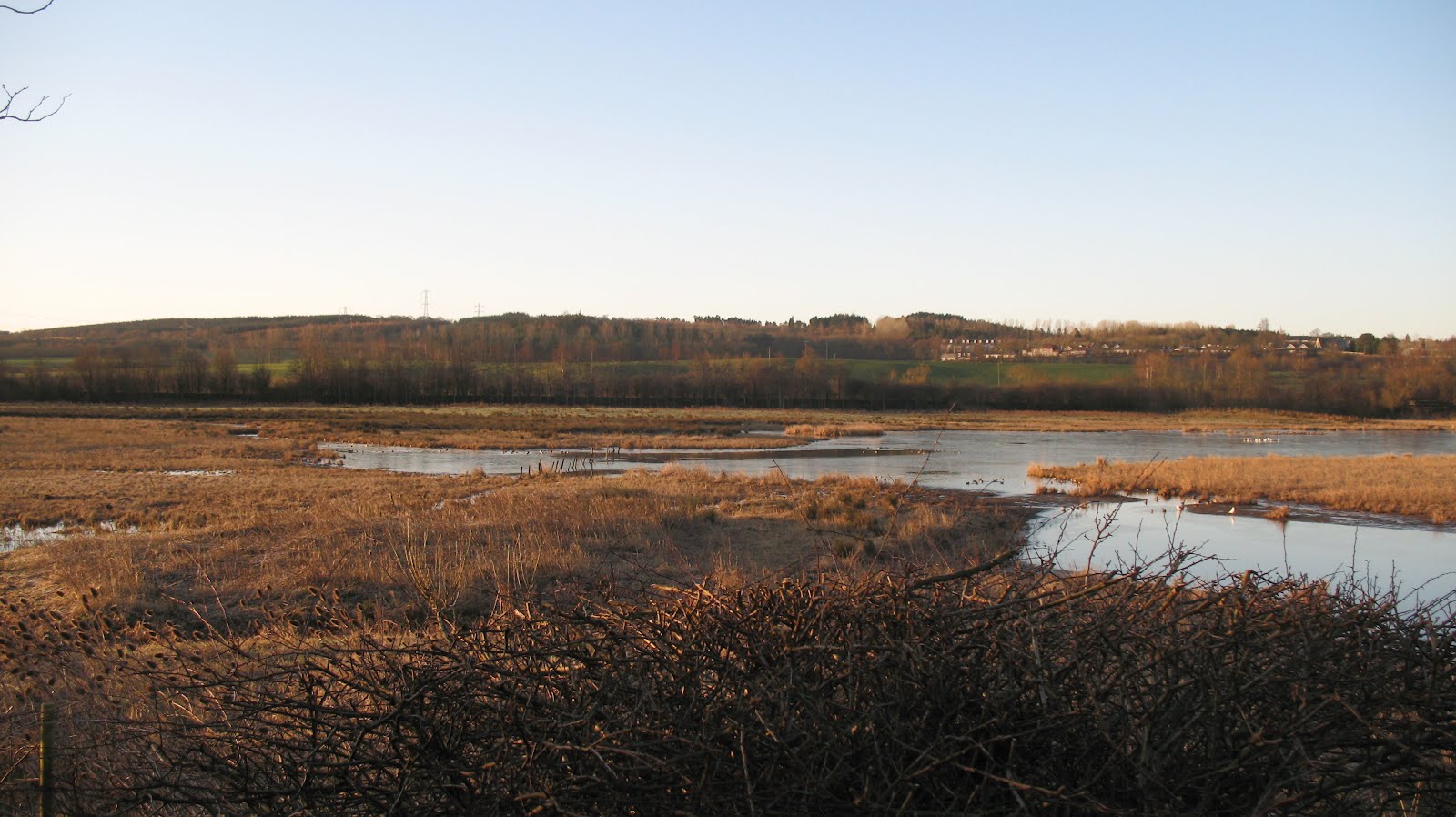
Barons Haugh RSPB Reserve, Motherwell
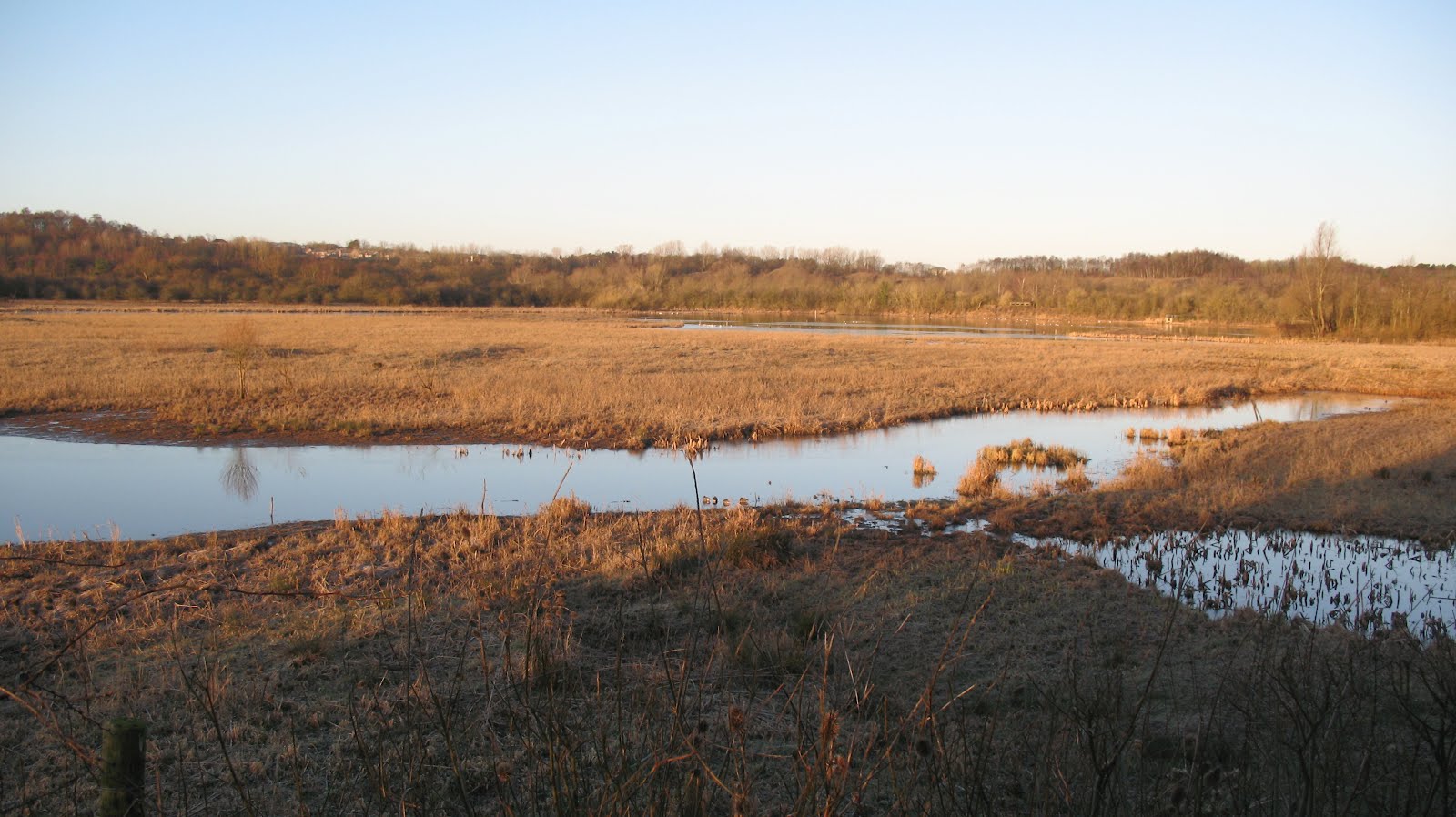
Looking south
Pardeep Chand (ex Barons Haugh Warden) & TUB
The RSPB Glasgow crew: Jenny Tweedie, Ryan Walrath & Ruth Curruthers with TUB outside Kelvingrove Museum
Spent a lovely Sunday north of the border at the behest of RSPB Glasgow to deliver a talk within the stunning Kelvingrove Art Gallery and Museum – a building that really reminded me of a mini Natural History Museum. Jenny Tweedie (Communications & Media Officer) told me that it was one of the most popular tourist attractions un the UK outside London. I could see why.
The talk went well and was well attended. As ever, there is always one person in the audience that approaches me at the end to say that they had had personal experience of Wormwood Scrubs, my beloved local patch.
Earlier in the morning I spent time with Pardeep Chand who escorted me around his beloved stomping ground, Barons Haugh. Until last Friday he was the warden of this very interesting looking urban reserve. It was a mixture of wetlands and woodlands and had a good mix of birds to boot. We saw Whooper Swans, Goldeneye, Gadwall, Teal, Curlew, Lapwings and the commoner gulls whilst in the wooded areas we were entertained by Nuthatches, Great Spotted Woodpeckers, Treecreepers & Goldcrests. Recent goodies here have included Spotted Crake, Long-billed Dowitcher, breeding Garganey and someone in a hide showed me footage of an Otter swimming around that he took using his mobile.
I had never heard of Barons Haugh before, but I would definitely recommend that you visit it. Cheers RSPB Glasgow for opening my eyes even further to the wildlife of your city and its environs.

Cats

Not quite black-and-white
I was thinking about cats the other day. I find some of them quite cuddly and strokeable but if I am honest, I am not their biggest fan. The sign I saw in a shop window in Folkestone the other weekend summed it up. It was one of those joke signs akin to ‘Beware of the dog’ – you know the type. This one said, ‘A cat lives here with several servants.’ I thought that was pretty apt.
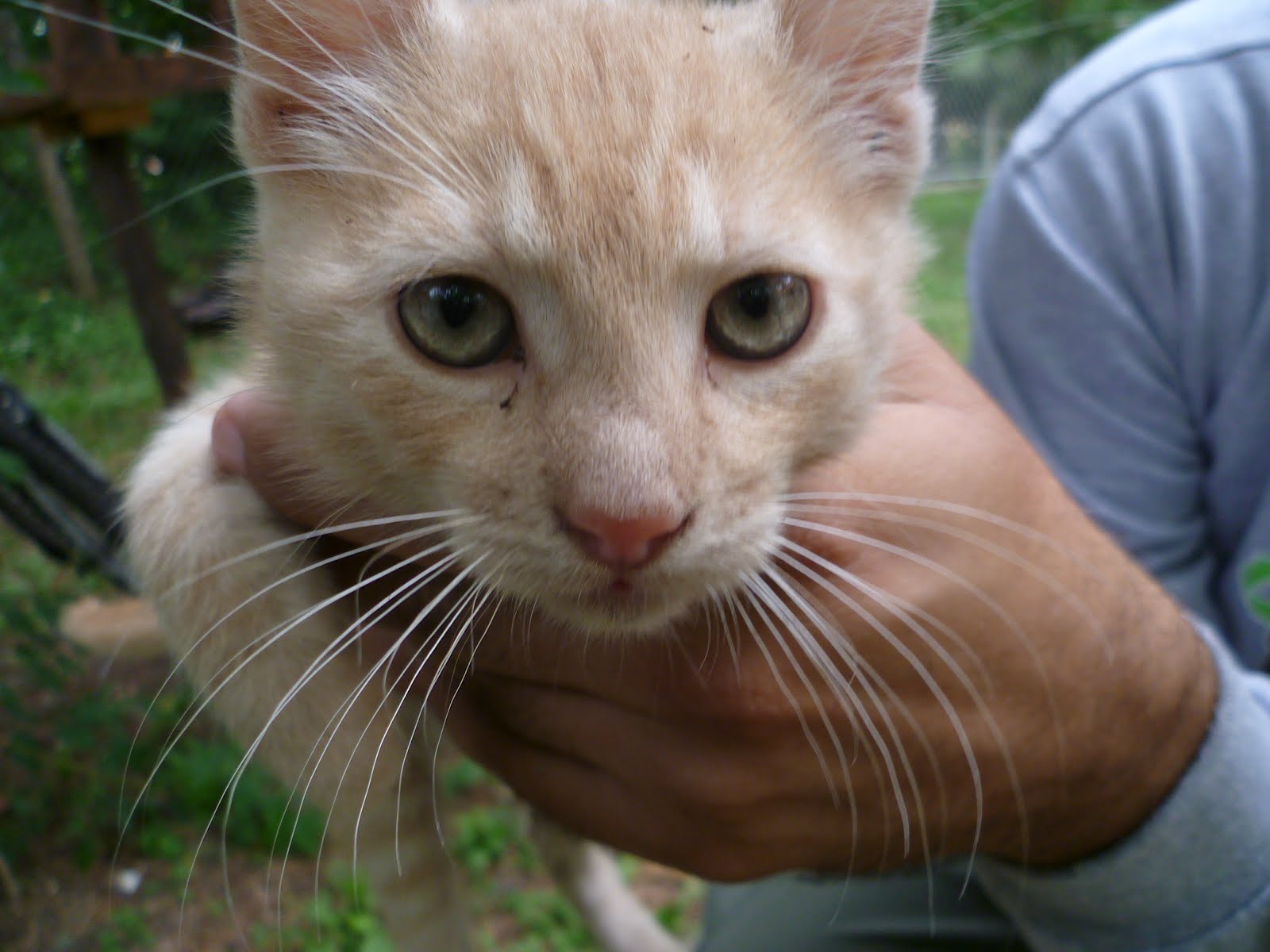
I used to have a cat myself when I was eleven. Her name was Twinkles and I got her as a kitten from my then big birding buddy and local neighbour, Cornelious Ravenwing III. Twinkles was a doppelganger of her mother; slender, black and white and likeable. As a kitten she was very playful. I used to routinely have lascerated hands after a bout of boisterous playing with her. Perhaps the best thing about Twinkles was that she used to meet me as I walked home from school. She would wait on our street standing on someone’s wall and then jump into my arms. Sometimes I’d whistle for her as if I were calling a dog and she would appear out of nowhere, delighted to see me.
One day, I came home from school and Twinkles was nowhere to be seen. Wailing, I searched the streets for two days. No sign. I had only had her for six months although it seemed like an eternity. I was heartbroken.
There. That’s my cat story out of the way and I bet you thought I was going to talk about cats killing birds!

Cecil Fowler

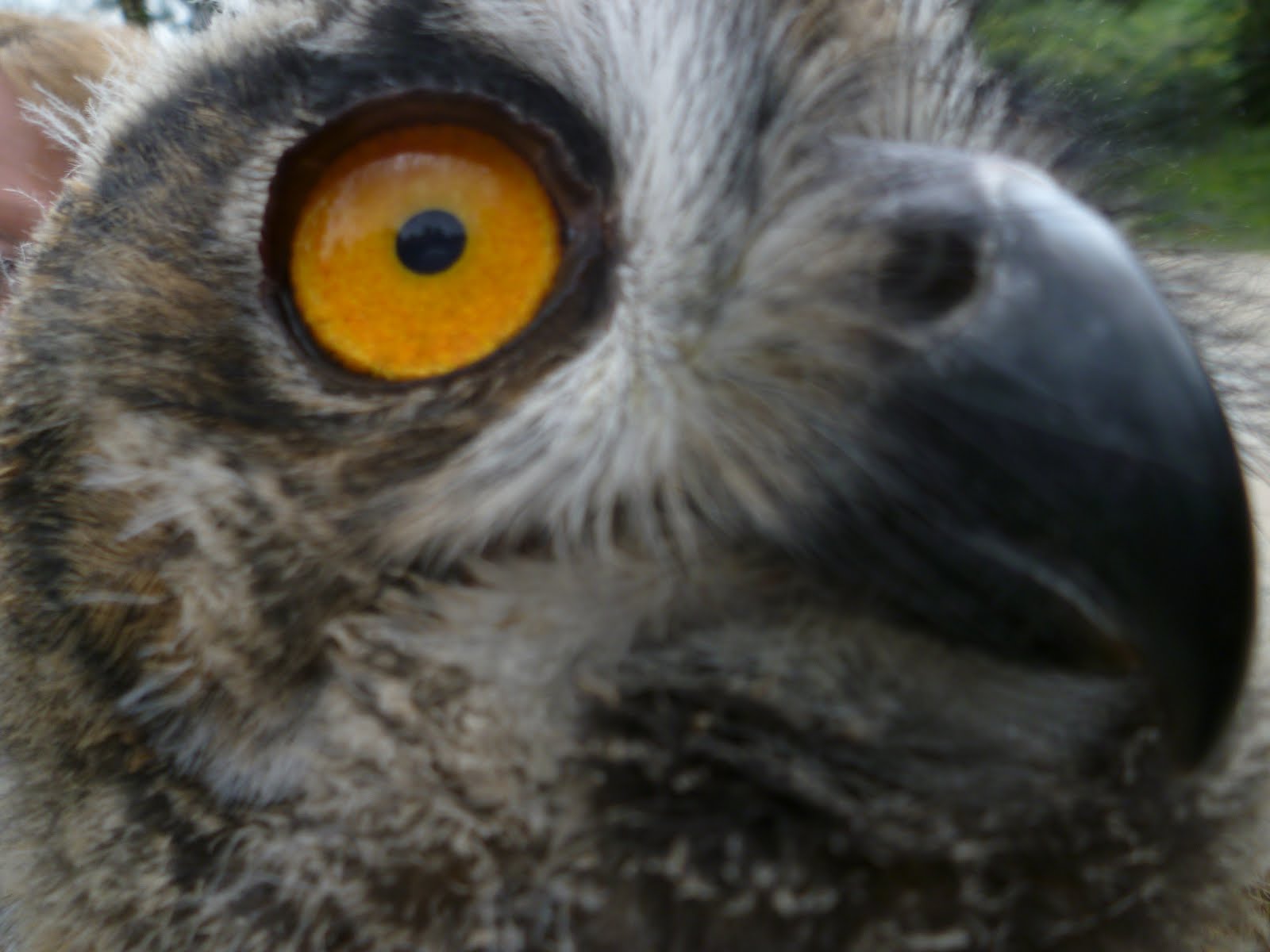
Cecil the Eagle Owl giving us the eye
Cecil looking for lunch
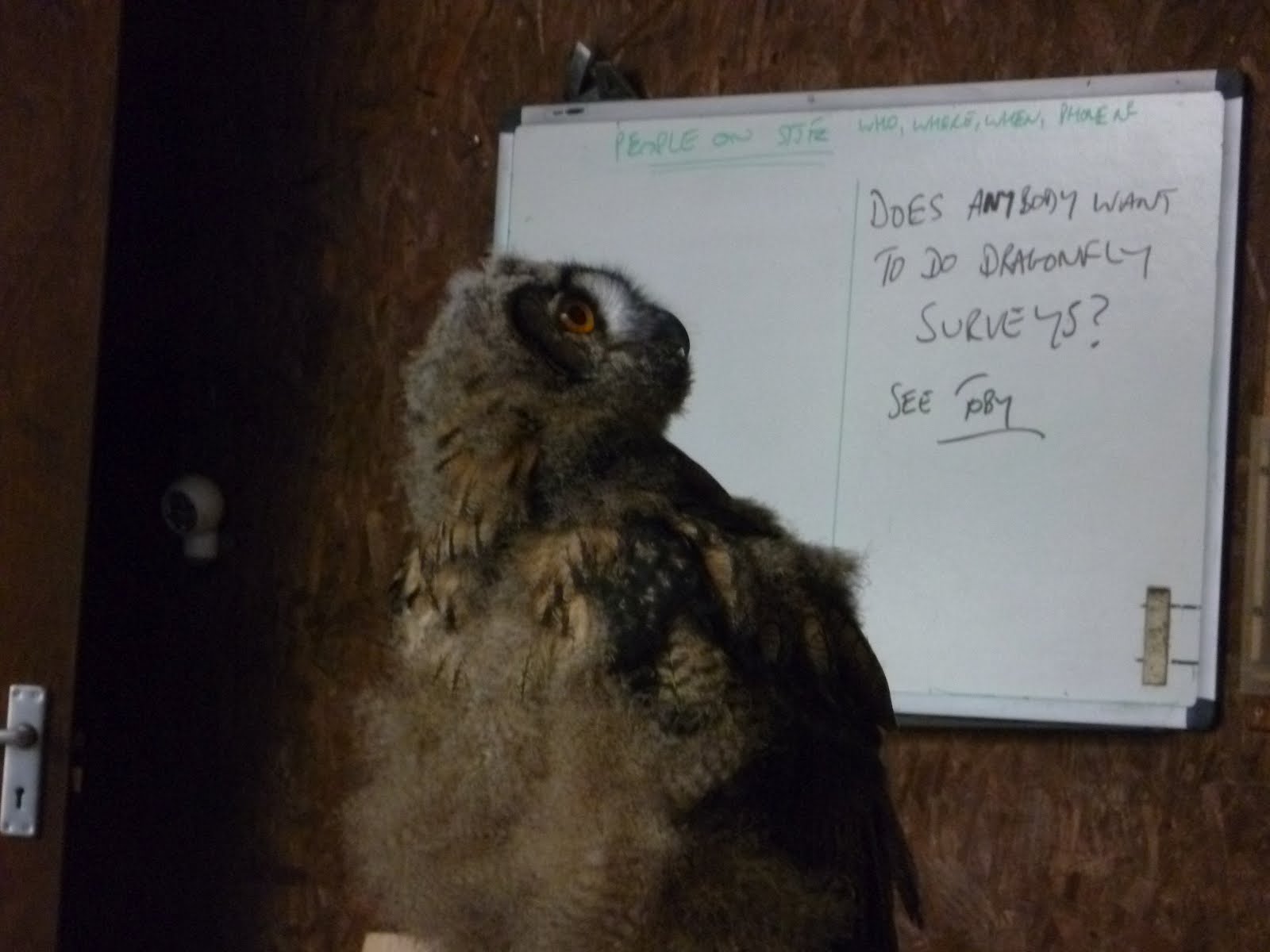
Cecil reading up on survey work!
Last spring whilst co-leading a bird walk at Arne RSPB Reserve in Dorset, I had the pleasure of meeting Cecil Fowler, the then fluffy and adorable captive Eagle Owl. I was impressed by his weight as he sat on my gloved arm. We had a special bond and at one time we were both independently looking up watching flocks gulls passing over. He was being primed as an Eagle Owl ambassador to be taken around schools for kids to marvel at his size and whoop when he would spread that impressive wingspan.
The more alert amongst you would have noticed that I used the phrasing ‘the then fluffy and adorable captive Eagle Owl’. The news that I heard recently was quite disturbing. He is now an adult and has reverted to being a wild animal who probably wouldn’t think twice about taking your eye out and/or sinking those massive talons into a fleshy human appendage!
Obviously, his school days are over and now he is a stud in a breeding program. You can take an owl out of the wild but you can’t take the wild out of the owl.

Redwings, Fieldfares and Brass Monkeys!

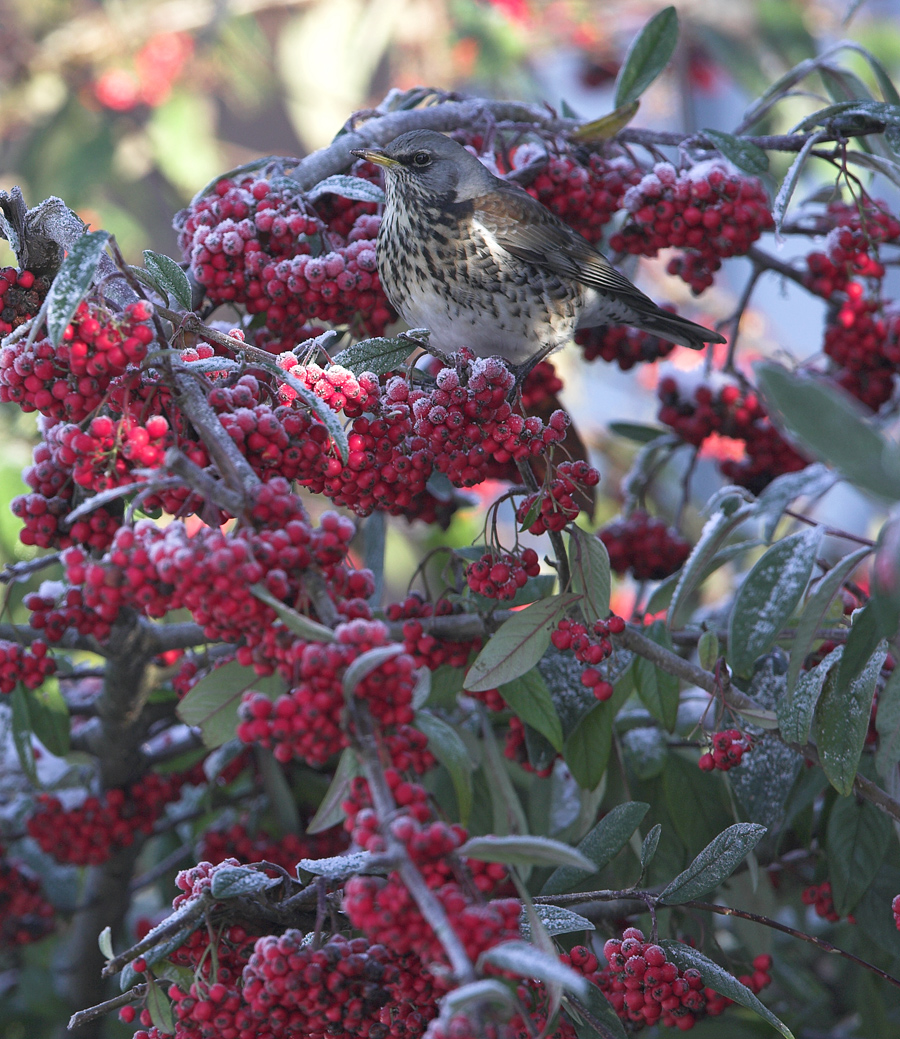
Fieldfare (Anthony McGeehan)
It is totally brass monkeys out there!
I have just come back from giving a talk to the Luton and South Bedfordshire RSPB Group and I must thank God for arranging for a fast, warm train to be waiting on the platform to shift my quarters back to London in double quick time. The cold weather is obviously having an affect of the birds as I have been noticing the roving Fieldfares and Redwings in particular. I feel bad that I haven’t been able to watch any recently but I’m planning to rectify that tomorrow morning when I arise from my warm pit to brave the elements and journey to Wormwood Scrubs.
Fortune favours the brave they say. Let us see.

Plenty of Bullfinches but where are the Crested Tits & Black Woodpeckers?

Male Bullfinch (Russell F Spencer)
Bullfinches seem to be the flavour of the month right now. Everywhere I turn I see Bullfinches apart from in real life.
Okay, I haven’t been out as much as I should have been recently but ever since I wrote a piece in RSPB ‘Birds Magazine’ on these delectable birds I have had loads of people sending me emails and tweets telling me about the Bullfinches in their gardens. There seems to be an awful lot of them out there – Bullfinches that is and it’s heartening.
Now, on a slightly different subject, can somebody please tell me why there are no Crested Tits anywhere in the UK aside from their outpost in Scotland and why Black Woodpeckers haven’t been officially found in the UK?

A stroll along the Folkstone seafront

A winter plumaged Mediterranean Gull – (Sacha Barbato)
Over the weekend, I decided to spend time cogitating in Folkestone, Kent. I’ve recently decided that it is important to have time away from the daily pressures in order to figure out ideas and generally replenish the creative reservior. The coming week will be a busy one for me as I will be giving four feature length talks including two RSPB groups in Twickenham and Woodbridge in Suffolk, plus I’ll be speaking at the Destinations Travel Show in Earls Court and at Slimbridge WWT next Sunday at their Festival of Birds weekend.
I was nice to stroll along the seafront at Sandgate, on the eastern end of Folkstone watching the gulls stream past. They were mostly Herring Gulls, but I counted a fair number of Black-heads plus at least 30 Mediterranean Gulls. Those white-winged wonders have been a particular favourite of mine for years. I just love their graceful look and those glorious white wings.
Indeed, I saw my first ever Med Gull a few miles down the coast at The Patch at Dungeness back in the early ’80s’. I remember fretting about whether I would be able to recognise one when I saw it and if I would struggle from deciphering it from the far more common Black-headed Gulls. I need not have worried because when I eventually saw one it seemed so obvious. I must say that I rarely have trouble spotting adult birds these days. I’ve just lock into them now.
Anyway, mulling ideas are over with now. Time to start the week.

Family Guy

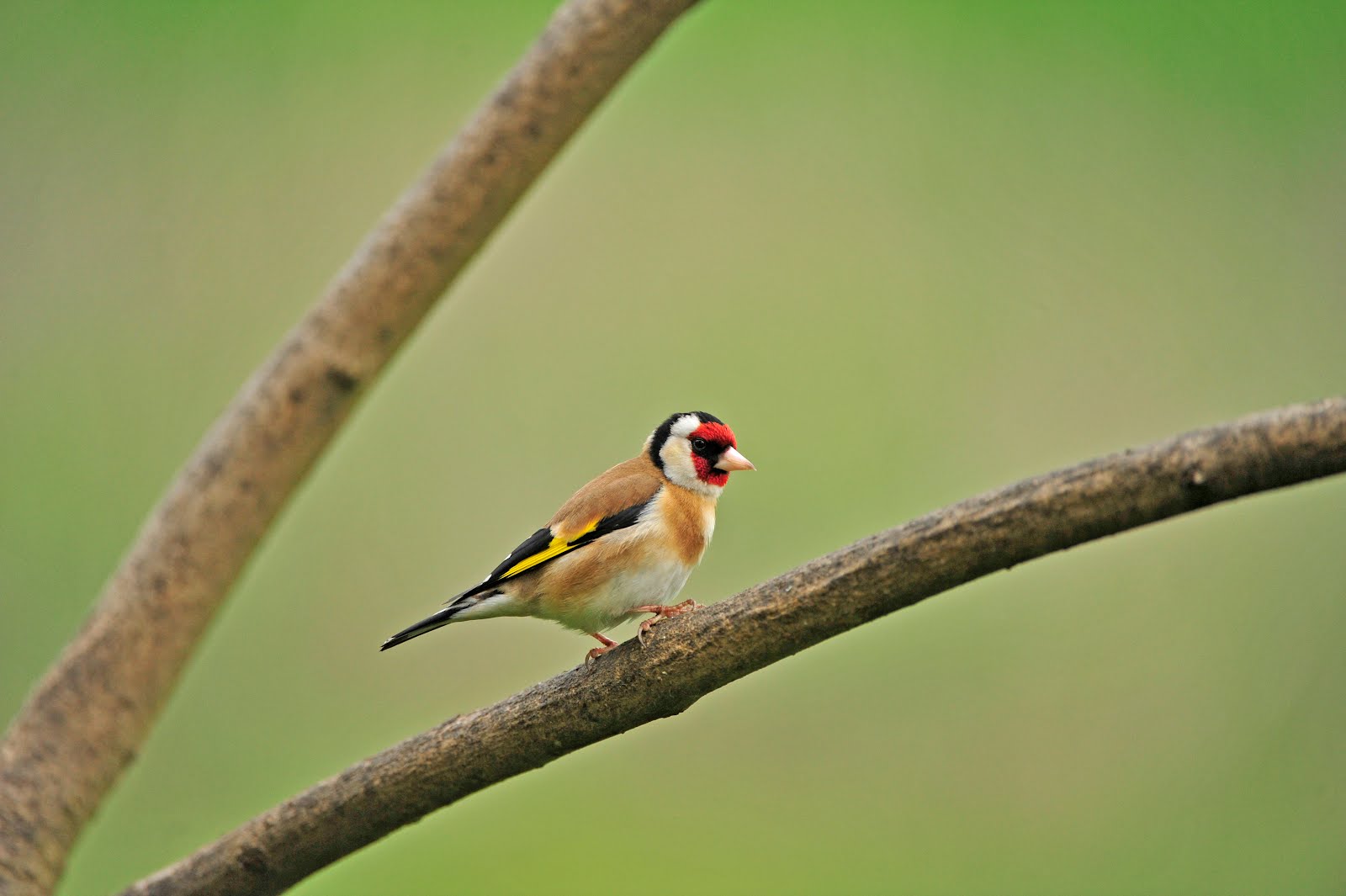
European Goldfinch (Russell F Spencer)
This month has raced by as far as I can see. However, most of my time has been spent behind a computer screen, perhaps peering over the top of the laptop screen to squint at a some Family Guy every now and again.
Today, I put the finishing touches to a tour of Serbia in April that I will be leading. More details regarding that.
Right, back to Family Guy!

Kate Humble & Tub

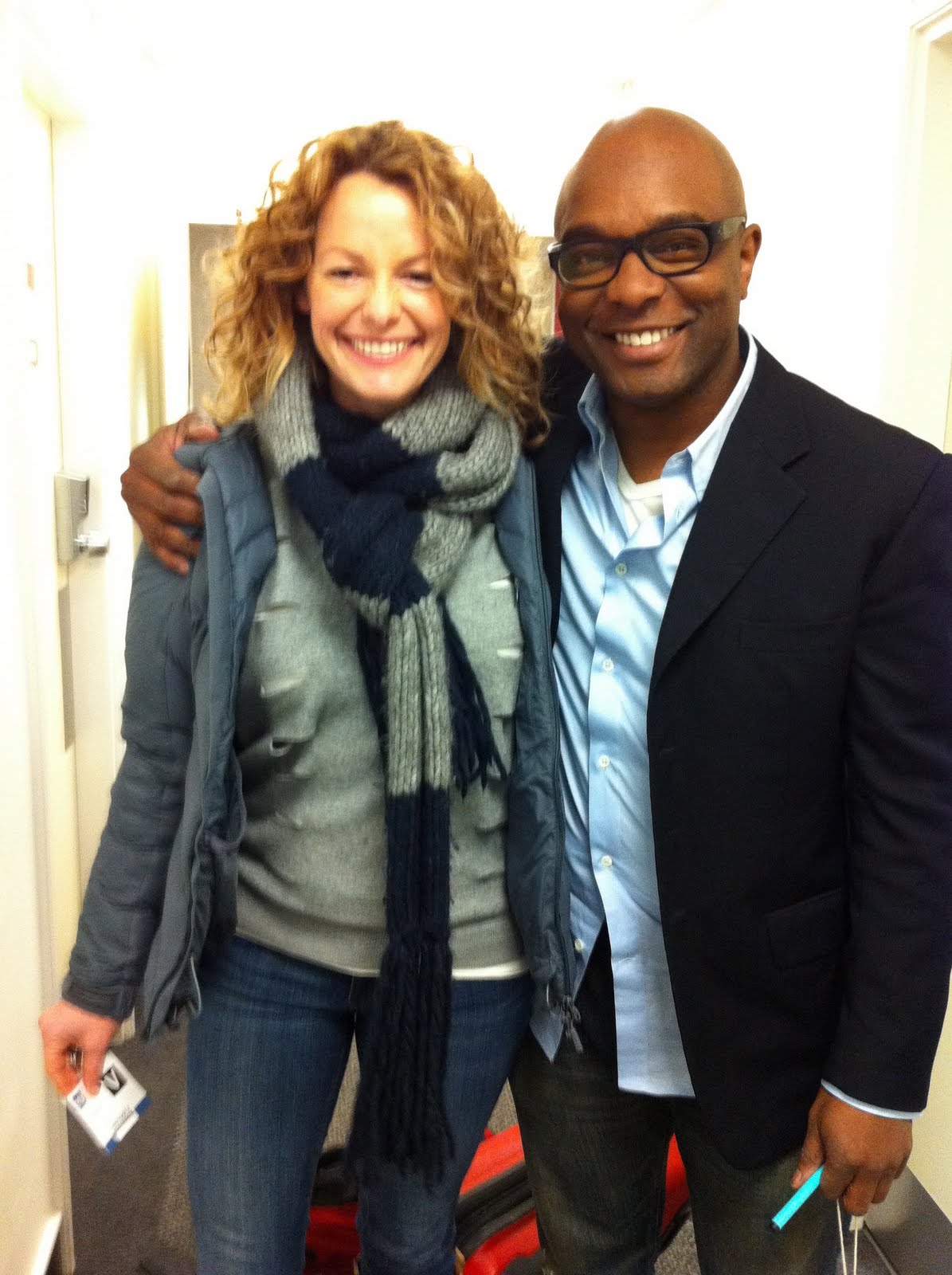
The lovely Kate with TUB
Spent a lovely afternoon hanging out with Kate Humble on the Alan Titchmarsh Show on ITV1. We were there to launch the RSPB’s Big Schools Birdwatch and I was specifically there to chat about the equipment that budding birders could use.
I’m quite interested in eyeing up that super expensive Sony recording binoculars.

Campaign trail

East London and beyond (Geoff Nutter)
This morning I spoke at The Outdoor Show at London Excel in the Docklands. Incidently, the ‘Excel’ bit actually means exhibition centre London – a fact that I never knew. The Outdoor Show was basically a room filled with outdoorsy-type exhibitors stands that were swarming with interested members of the public.
I spoke on stage for nearly an hour about urban birding, following hot on the heals of the venerable Dominic Couzens who spoke about bird behaviour. He delivered a very interesting talk from which I learnt a lot. My only complaint was that the organisors never once came around to say hello. Most unprofessional.
Got two very interesting emails today. Firstly, I have been asked to write a 500 word essay about why society needs to treasure open spaces by 20/20Vision – a nature photography project aiming to communicate the link between habitat restoration and our well being. I am one of five respected commentators being asked to contribute to a book coming out later this year. I’m particularly honoured because I will be in the company of the likes of Simon Barnes. You can find out more about their work at www.2020v.org.
I was also asked to join in a debate regarding the proposed Thames Estuary Airport in the Thames Estuary, to be held next week in central London. With several politians, conservationists, high calibre business people plus members of the local community, it promises to be an interesting meeting.

Long-tailed green flying rats?

Rose-ringed Parakeet (Yvette Spencer)
I think that it’s a well known fact that I am not a great fan of our ever-increasing populations of Rose-ringed Parakeets.
I won’t bore you with my reasons now, but tonight I received a tweet from a guy in Cardiff who proudly announced the arrival of the city’s first bird.
You wait mate!

What I’ve been missing

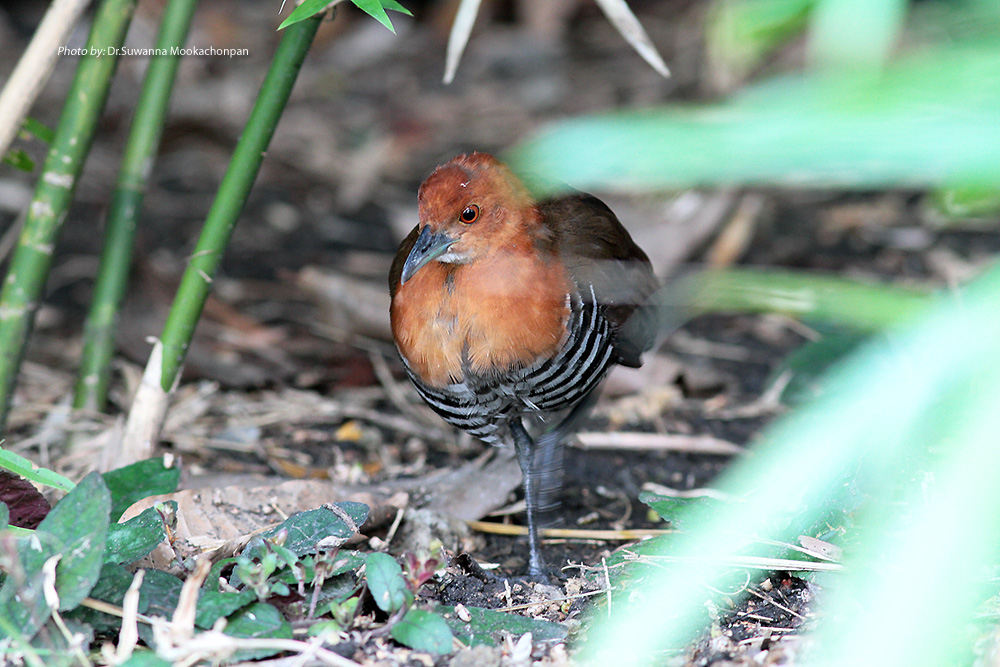
Slaty-legged Crake (photo c/o Phil Round)
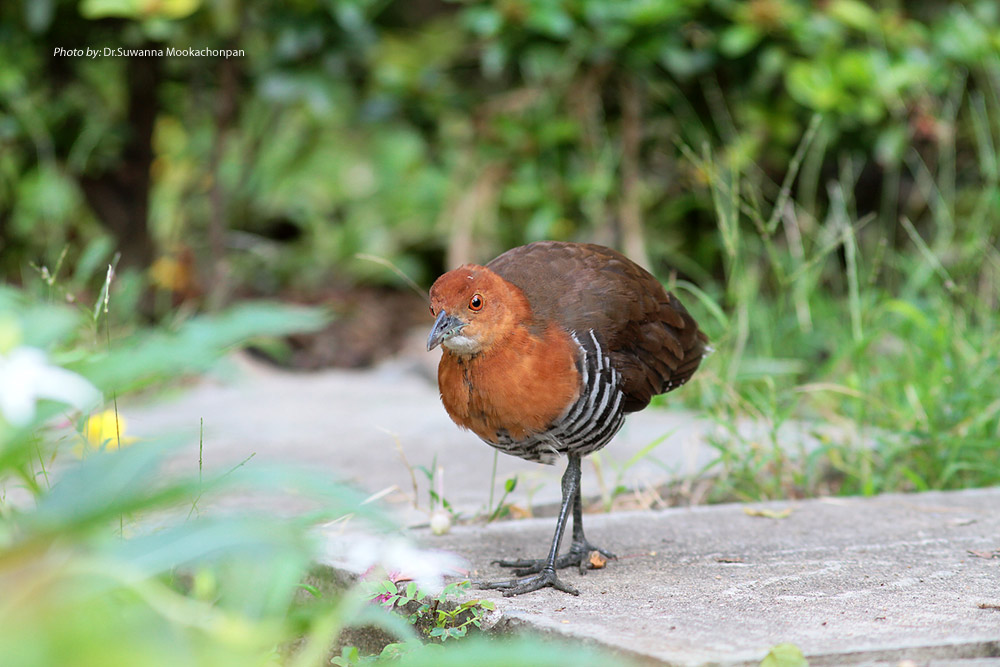
Slaty-legged Crake (photo c/0 Phil Round)
Whilst languishing in The Scrubs (my patch and not the prison) sifting through flocks of Black-headed and Common Gulls in the vain hope of finding a wind swept Kittiwake, I received an email from Thailand based birder, Phil Round.
Phil, for those who don’t know is a renowned birder, Thailand’s top lister and the rediscoverer of enigmatic Gurney’s Pitta. Apparently, a Slaty-legged Crake was found residing in a flowerbed Chulalongkorn University in downtown Bangkok. It was particularly exciting for Phil because it was only his second ever Slaty-leg in Thailand!
All hail Urban Birding!

Back home

For those who are interested, below I have listed the species that I saw on my supposed non-birdy holiday to Thailand!

The birds in brackets were only heard and not seen.
Dabchick Little Cormorant Striated (Little) Heron Chinese Pond Heron/Javan Pond Heron Eastern Cattle Egret Great Egret Intermediate Egret Little Egret Eastern (Pacific) Reef Egret Grey Heron Purple Heron Cotton Pygmy Goose Osprey Black-eared Kite Black-shouldered Kite Brahminy Kite Greater Spotted Eagle Pied Harrier Eastern Marsh Harrier Common Kestrel Peregrine Black-headed Ibis Black-faced Spoonbill Asian Openbill White-breasted Waterhen Common Moorhen Pheasant-tailed Jacana Bronze-winged Jacana Black-winged Stilt Avocet Red-wattled Lapwing Lesser Sand Plover Greater Sand Plover Grey Plover Pacific Golden Plover Little Ringed Plover Kentish Plover Malaysian Plover Black-tailed Godwit Bar-tailed Godwit Eurasian Curlew Ruff Sanderling Great Knot Red-necked Stint Temminck’s Stint Long-toed Stint Curlew Sandpiper Spoon-billed Sandpiper Broad-billed Sandpiper Common Sandpiper Terek Sandpiper Spotted Redshank Marsh Sandpiper Greenshank Wood Sandpiper Common Snipe Red-necked Phalarope Little Tern Common Tern Gull-billed Tern Caspian Tern Greater Crested Tern Whiskered Tern Black-headed Gull Brown-headed Gull Heuglin’s Gull Feral Pigeon Red-collared Dove Spotted Dove Zebra Dove Pink-necked Green Pigeon Plaintive Cuckoo Asian Emerald Cuckoo Asian Koel Greater Coucal ((Spotted Little Owl)) Himalayan Swiftlet Germain’s Swiftlet Asian Palm Swift House (Little) Swift White-throated Kingfisher Black-capped Kingfisher Common Kingfisher Collared Kingfisher Indian Roller Little Green Bee-eater Blue-tailed Bee-eater Hoopoe Oriental Pied Hornbill Coppersmith Barbet Fulvous-breasted Woodpecker ((Golden-bellied Gerygone)) Black-winged Cuckoo-shrike Ashy Minivet Sand Martin Dusky Crag Martin Barn Swallow Richard’s Pipit Paddyfield Pipit (Eastern) Yellow Wagtail White Wagtail Black-naped Oriole Ashy Woodswallow Pied Fantail Black Drongo Ashy Drongo Greater Racket-tailed Drongo Large-billed Crow Asian Pied Starling Black-collared Starling Common Myna White-vented Myna Stonechat Common Iora Yellow-browed Warbler Dusky Warbler Zitting Cisticola Common Tailorbird Plain Prinia Oriental Magpie Robin Asian Brown Flycatcher Taiga Flycatcher Chinese Blue Flycatcher Asian Paradise Flycatcher Brown Shrike Olive-backed Sunbird Scarlet-backed Flowerpecker Black-headed Bulbul Yellow-vented Bulbul Streak-eared Bulbul Scaly-breasted Munia House Sparrow Plain-backed Sparrow Tree Sparrow Baya Weaver