The Wanderer Returns!
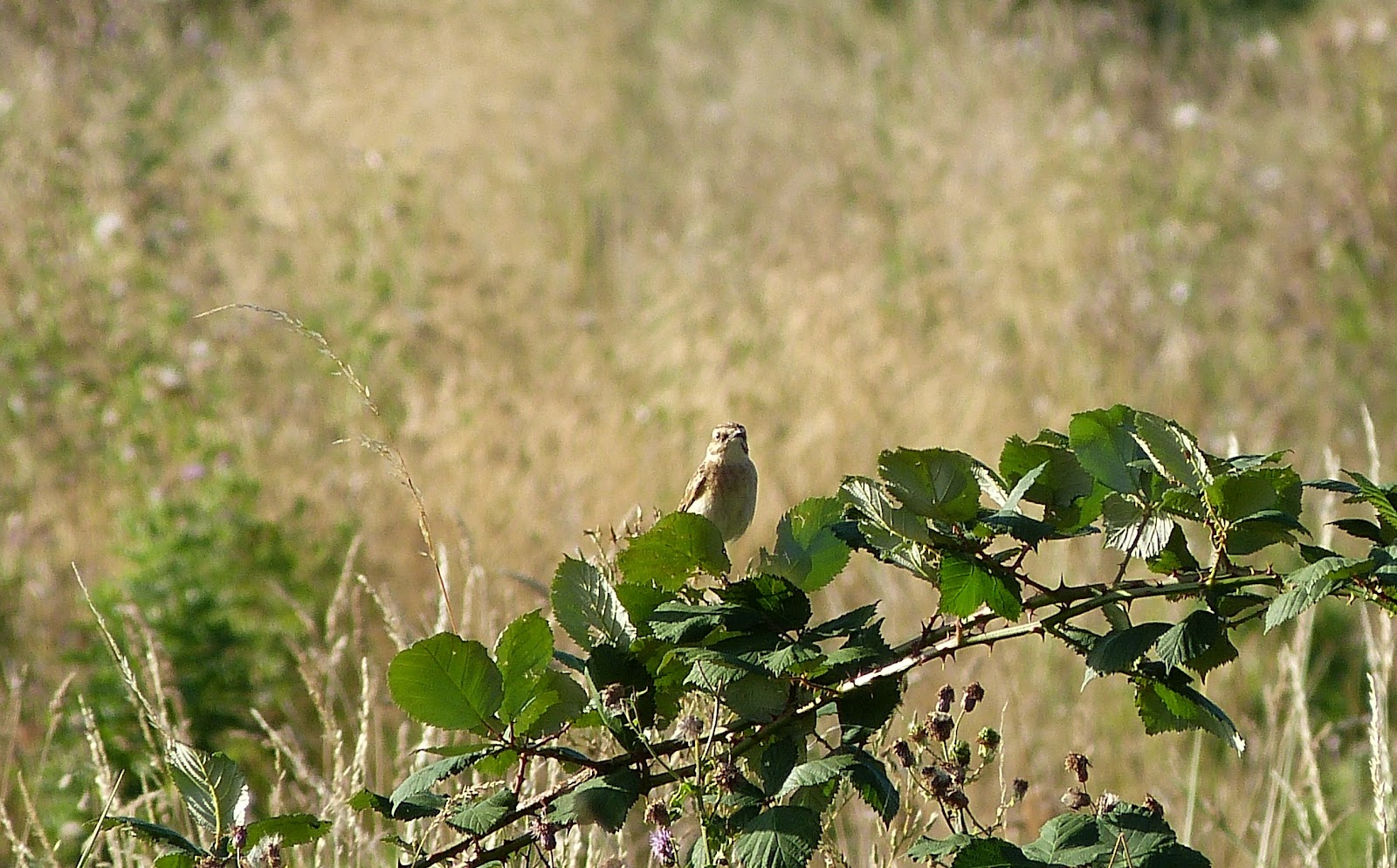
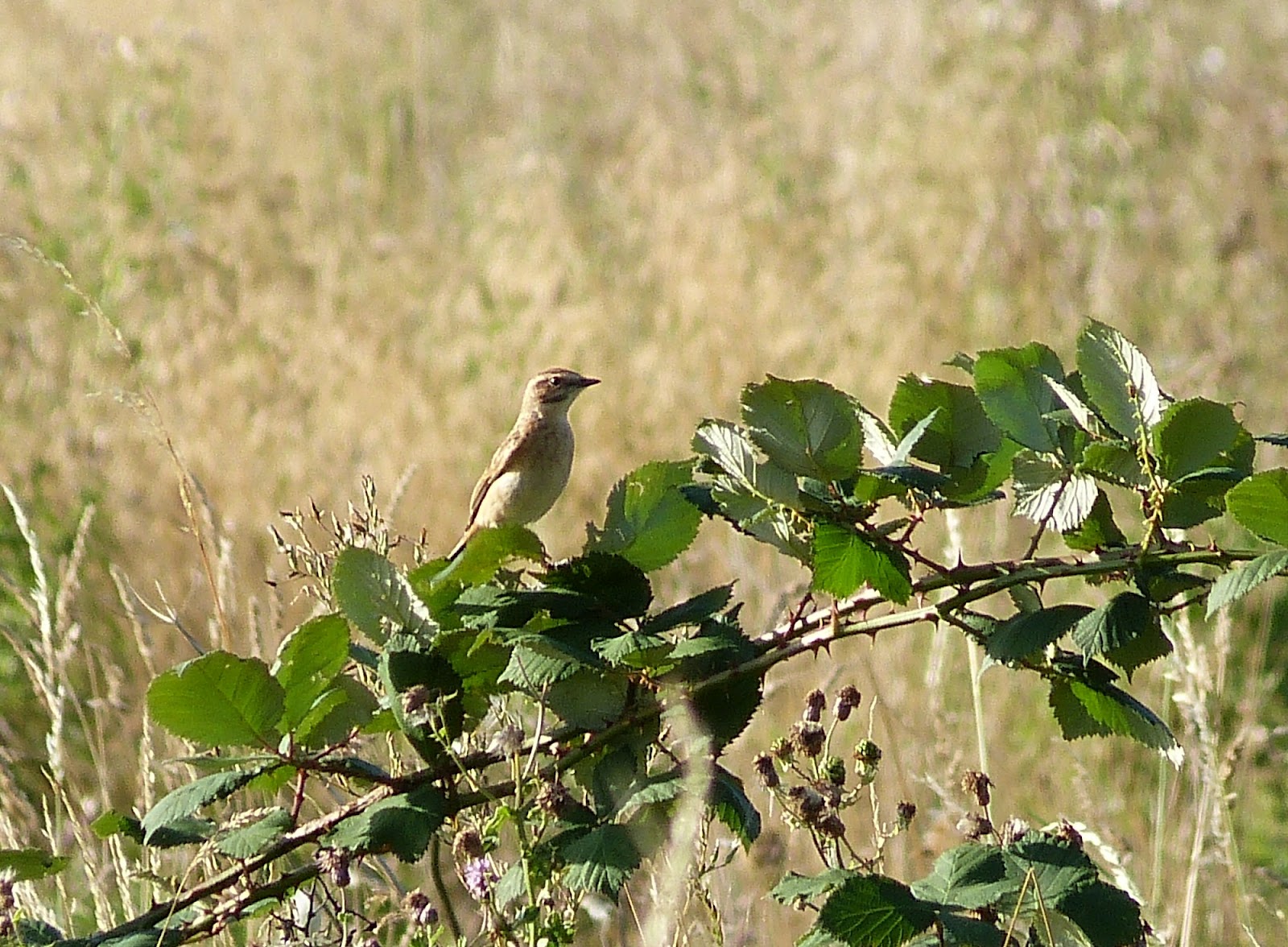
As the rest of London shuffles knee deep in delightful Whinchats, we at The Scrubs were crying into our peppermint teas lamenting at the non-appearance of our archetypal autumnal migrants. In days gone by we used to regularly host up to 20 birds on our grassland. Back then, we were the London terminus for this denizen of the wilder spots of Britain before they continued on south.
So how happy were we to have discovered one this morning!
The morning after the Nightingale before
Yesterday, we recorded our first ever autumn migrant Nightingale at The Scrubs. It was found along the western end of the embankment. This morning I came back to the scene of the crime in the vein hope of trying to relocate the bird.
Instead, I got attacked and bitten on the arm by a Pit Bull-type dog being walked by a woman who obviously had no control over it. The dog had to be pulled off me whilst it tried to chomp at my ankle. Thank God I was wearing my hiking boots!
Bird-wise it was pretty quiet with highlight being a Sedge Warbler I found skulking in a Chats Paddock bush alongside a Chiffchaff.
But you know what they say: tomorrow is another day!
Southenders
The most likely answer is that they were both Common Terns. Why? Well, they are both adult birds moulting into their winter plumages. Arctic Terns moult in their winter quarters, so are rarely seen in that plumage in the UK. Furthermore, they would not show so much black in the wing and have darker shorter bills. Sandwich Terns are altogether larger birds with longer black legs. Roseate Terns should display longer tail streamers and longer legs. Finally, the plumage and larger size is totally wrong for Black Tern.
All that said, I still have a problem with them, particularly tern no.2. Some people have said that the legs appear shorter because the belly feathers are fluffed out. Even if that was the case, how does that explain their thin appearance?
I’m still not wholly convinced of their identity, but hey, that is the beauty of birding: nothing ever looks exactly as they do in the books!
Not like this lovely Ruddy Turnstone – a lot more straight forward.
Scrubbing for migrants
I have been thrashing my local patch on a near daily basis for nearly two weeks now – and mostly for selfish reasons if the truth be known.
You see, many other London sites have recorded some amazing birds like Wanstead Flats in east London with their long staying Wryneck and just about everywhere else has had healthy showings of Wheatears, both Spotted and Pied Flycatchers plus late Swifts. Meanwhile, myself and other Scrubbers have been flogging the place looking for anything. To be fair we have found a few Common Redstarts, a couple of Garden Warblers and a couple Spotted Flycatchers but I would dearly love to find another Scrubs rarity.
It’s high time. Anyone out there with the ear of the Birding Gods?
Birding for mermaids (and mermen!)
Recently, I have managed to squeeze in reading a few books in between my usual mix of birding, writing, tour leading with perhaps a bit of sleep thrown in for good measure.
Petrels, Albatrosses & Storm Petrels of North America by Steve Howell was one book that I didn’t expect to get into as much as I did. This is a group of birds that I have relatively little experience of compared with the raptors or thrushes and chats. I found the book utterly fascinating. I loved the author’s comparison of the world’s seas with deserts, forests and other more terrestrial habitats. It never really occurred to me to think in those terms. Indeed, he went into great detail about the different oceananic weather systems and how birds reacted to them. Fascinating stuff. All this before I even started to read the species accounts.
Of course, North America is infinitely bigger than the UK and as such had a far larger array of petrels, shearwaters and albatrosses than us. Nonetheless, the species accounts were both informative and readable. The field identification sections were of particular interest as I was learning things about some of the familiar species that I had hitherto no knowledge of. I never knew, for instance, that female Sooty Shearwaters had smaller bills than the males. For a tubenose afficionado those kinds of details must be highly useful. Which brought me to my next thought: was the author a merman? How could he know so much about a group of birds that most of us only ever see swinging past some blustery headland on a cold autumnal morning.
Negatives? I wished that I lived in an area with easy access to many species of these birds. One day?
Goose stepping
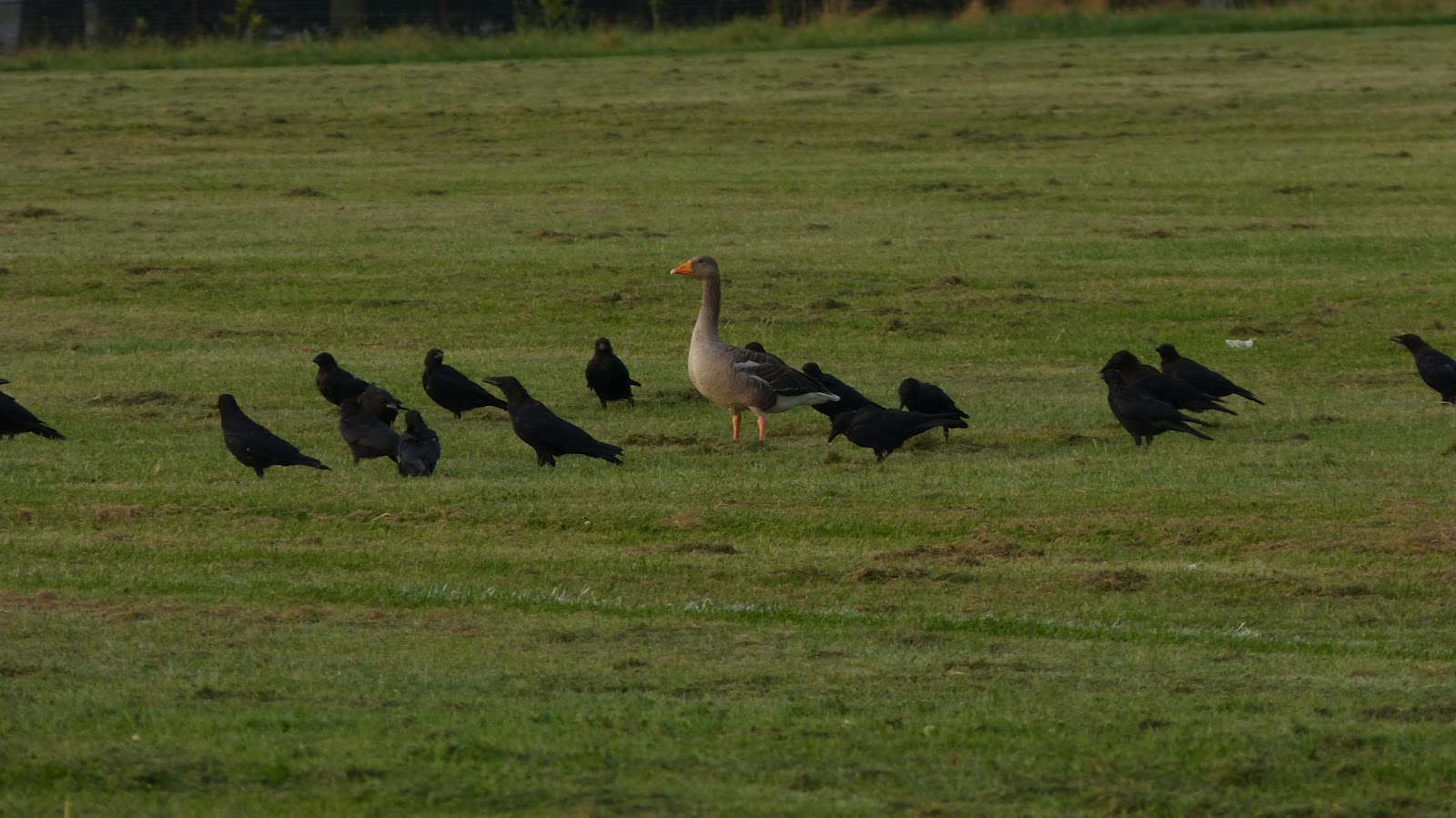
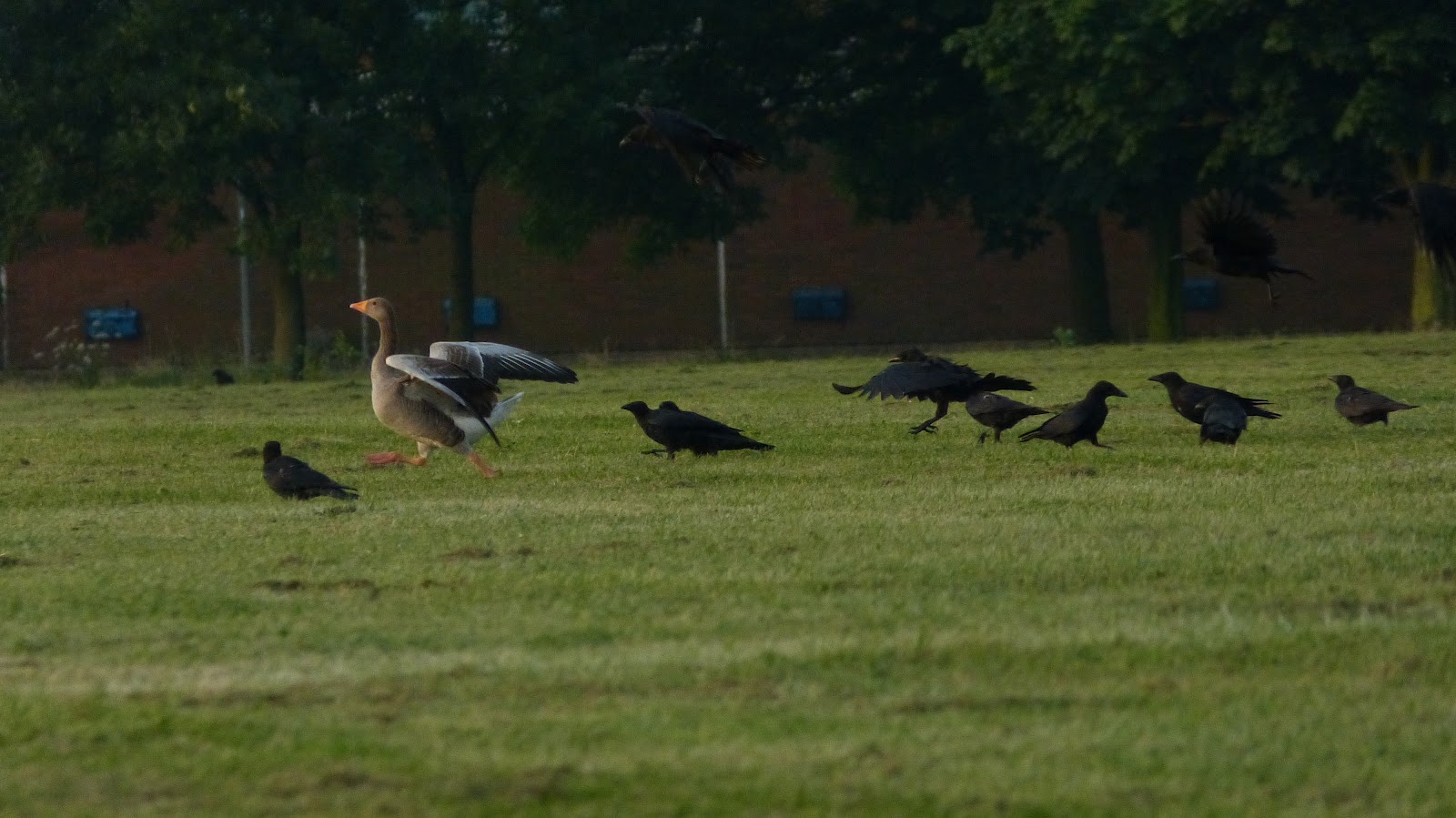
A funny thing happened on my patch this morning. I watched a Greylag fly in and land on the football pitches. It was immediately swamped by a posse of Carrion Crows – I counted around 50 at one point – who surrounded the goose and followed its every move.
Each species was weirded out by the other. The crows were thinking; ‘what is this big thing’, whereas the goose must of thought that this was some kind of strange welcoming committee Wormwood Scrubs style.
Eventually, the goose got bored and flew off strongly to the west leaving the crow bandits firmly on the deck.
Anyone else out there ever experienced the like?
Who said that there were only foxes in British cities?
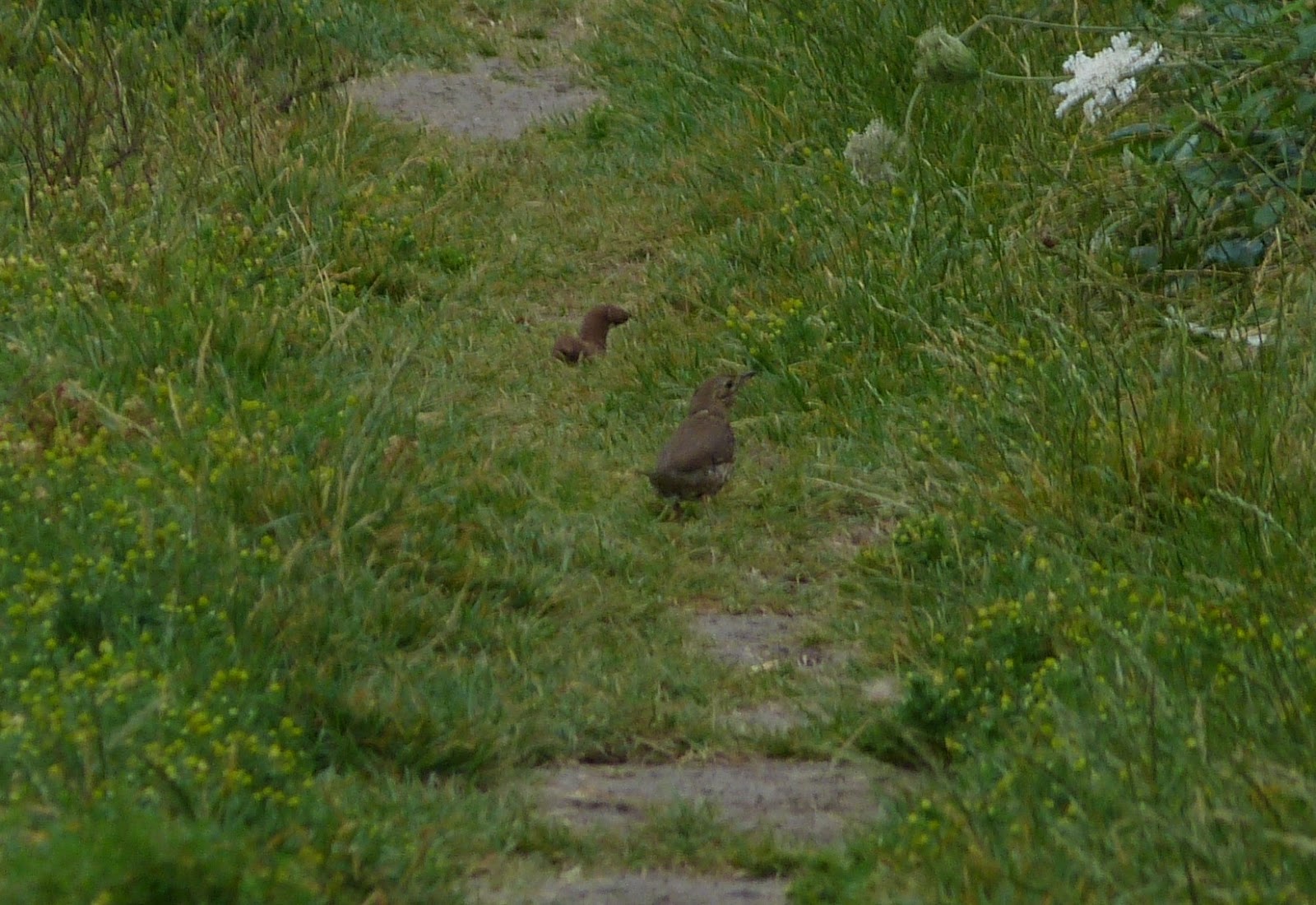
Yesterday, I was standing on the path facing the embankment area at The Scrubs when I became aware of a Song Thrush around 70 yards away standing bolt upright and stock still. When I scrutinised it I was amazed to see that it was being mesmerised by a Weasel that was sprinting back and forth across the path each time getting a little closer to the thrush.
The inevitable did not happen however. Just when I thought the thrush would meet it’s end a Sparrowhawk shot overhead sending everyone scurrying. It was an amazing sequence of events that I had never witnessed before. Even more amazing was to see a Weasel on my home patch within London, a mammal that I so rarely see at the best of times.
Gunnersbury Triangle LNR
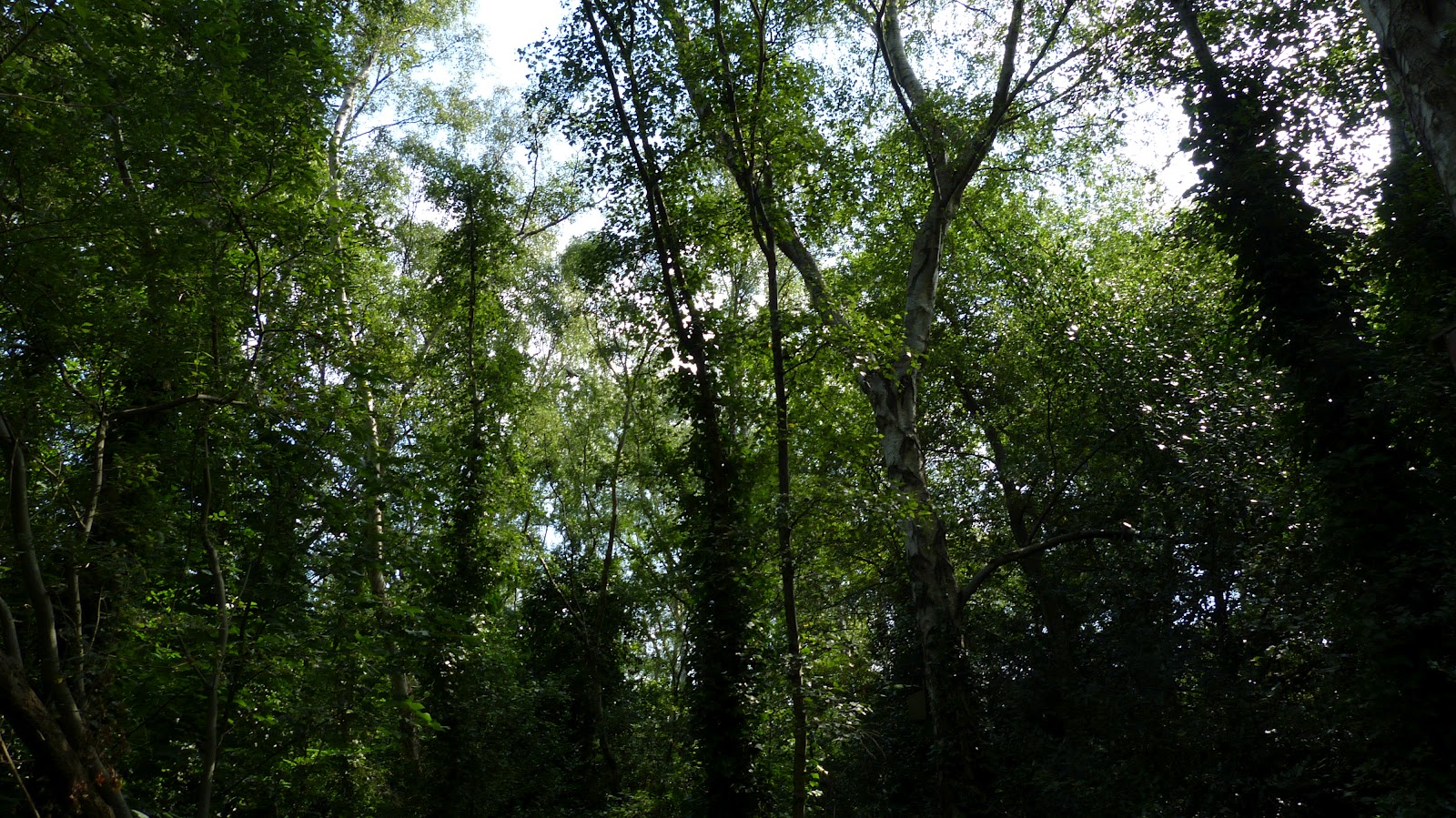
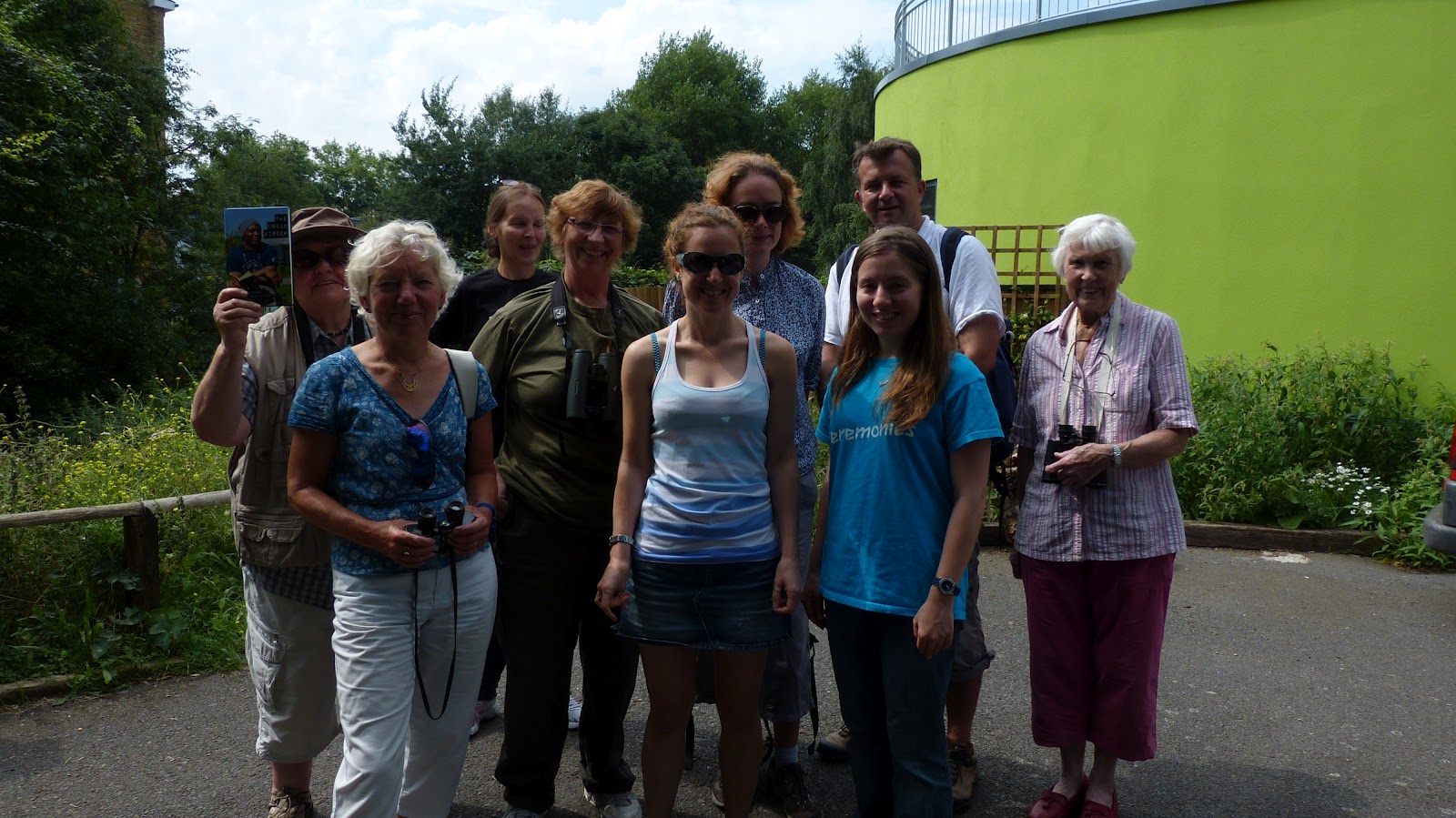
On Sunday morning just gone I led a bird walk around the London Wildlife Trust’s Gunnersbury Triangle LNR. It is a small yet perfectly formed Silver Birch and Willow woodland in Chiswick, West London that is totally encircled by railway, offices and habitation. There’s breeding Sparrowhawk, the usual common tits, Blackcap, Chiffchaff plus over 20 species of butterfly and tons of trees.
Plus there wasn’t just woodland on offer. There was a pleasant pocket-sized meadow, a pond and a small marsh. It was hard to believe that I was in the middle of London – it was so lush, quiet and peaceful. The best birds were a handful of Swifts high overhead and a flyby Hobby.
The site is under acute threat from development that that if given the go ahead will encroach on the very borders of the site. The Mayor of London’s office is to make a decision on Tuesday that could either block the development or help to destroy what the local people have been fighting to protect for so long.
I’ll keep you posted.
Rumble in the urban jungle
It’s has been all about The Scrubs recently. It has become a major drive in my life to visit my local patch come rain or shine (usually rain of late) to witness migration and hopefully add to the species tally. These days I am also now fully equipped with digiscoping capabilities so expect to see more of my largely terrible photography!
This morning I noted a tiny bit of evidence of the migration to come. Two Sand Martins swung by motoring west, low over the grassland and there were at least three migrant Willow Warblers at large. This latter species is a regular spring and autumn migrant at The Scrubs but has only been proven to breed once, in 2010, despite there usually being males singing sometimes well into June most years. Having said that, no male pitched a temporary residency this year which was hugely disappointing.
Don’t call it a comeback
It feels like it has been a thousand years since my last entry and a lot has changed in the world. We are in the throes of the London Olympics; an event that I openly admit to initially doubting its relevance. How wrong was I? I think that they have been brilliant thus far, not least for bringing us Brits together as a cosmopolitan nation united in emotion and pride while we support our sporting heroes.
Closer to home, I have also been busy visiting my patch, The Scrubs, in the vain hope of seeing something ultra unusual to pump up our year list. We are currently sitting on 87 species and I’m determined to raise that total to 100 by the end of the year even if I have find them all myself.
Some may say to achieve that on a site with no water will be an Olympian task. My retort would be: watch this space!
Cockney Sparrows
Sparrows have been the flavour of the month recently especially in the London area. I’ve been involved in the Cockney Sparrow Count organised by the RSPB, London Wildlife Trust, Green Information for Greater London and the London Biodiversity Partnership. The idea is to encourage Londoners to count their local sparrows until the closing date of 12th July.
I first mentioned Urban Birder Paul Davis a little while ago and his visitation to his from an unidentified small bird. We enventually worked out that the unknown passerine was indeed a oddly plumaged House Sparrow. This male has now become a bit of a celebrity. It’s even attracted the attention of the academics including the Curator of Birds at the Natural History Museum. He’s writing a paper on House Sparrow plumage aberrations.
Now who said House Sparrows were boring?
I want my summer back!!
Mixed Bag
Mystery son of a seedeater
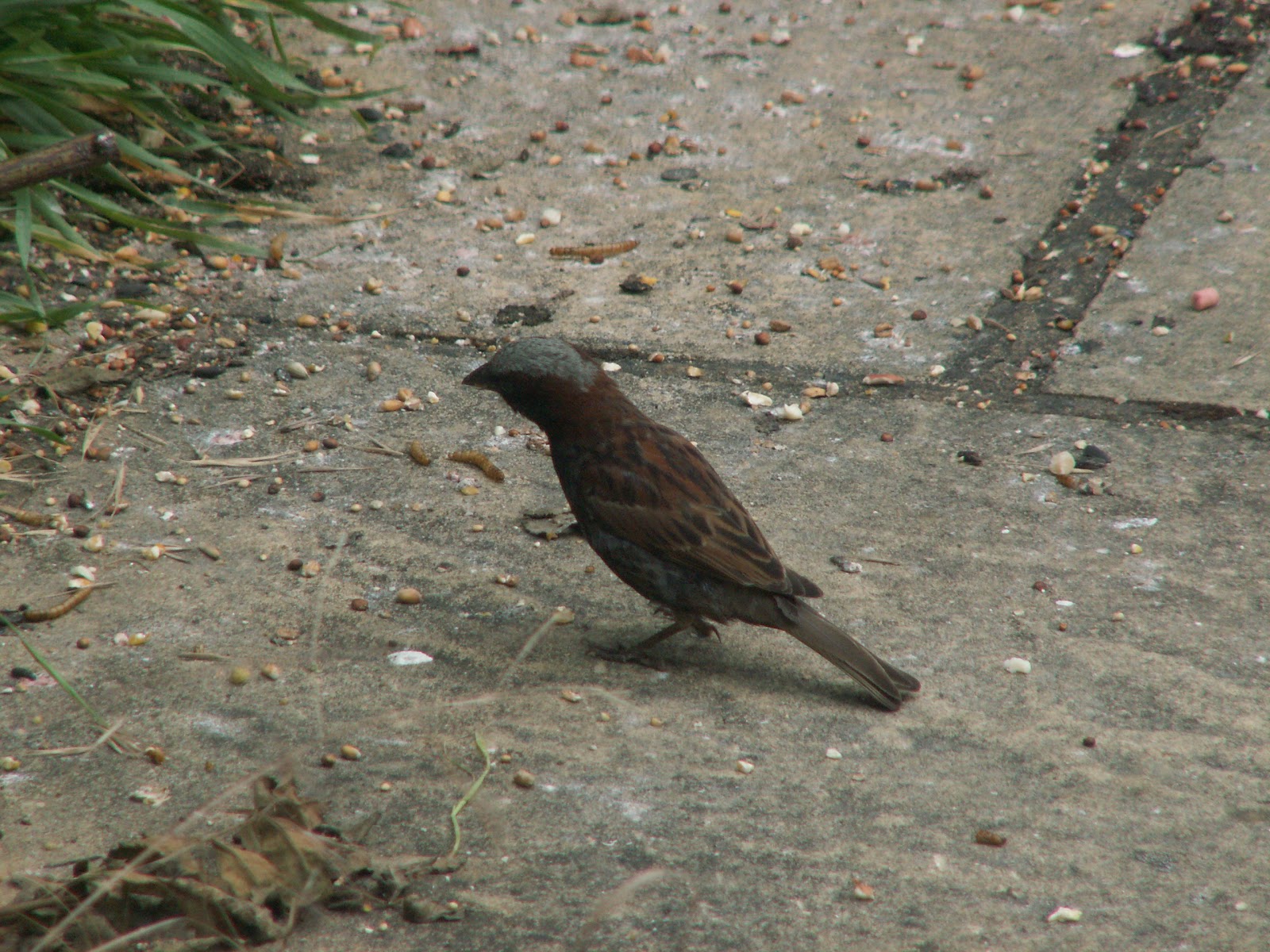
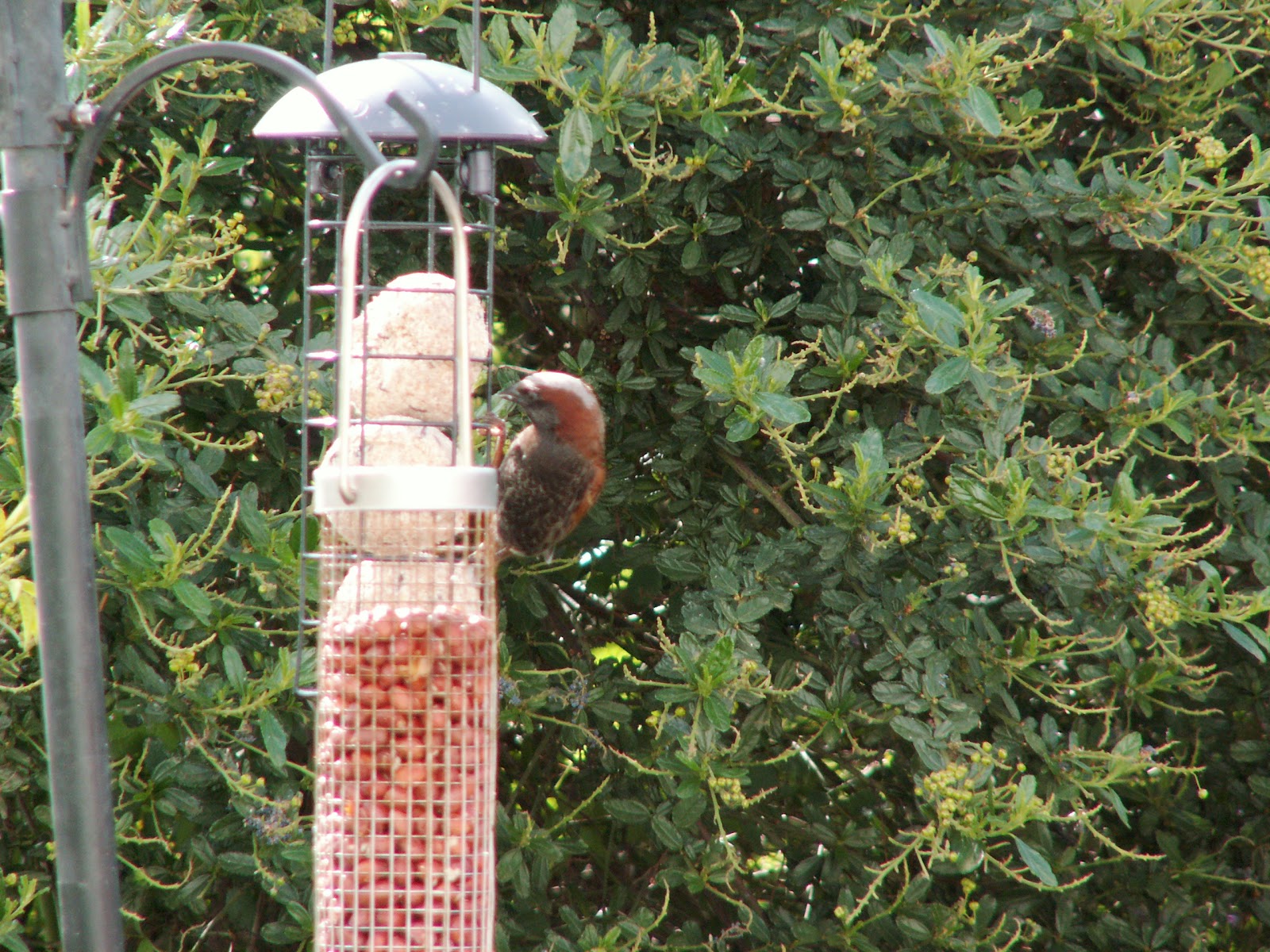
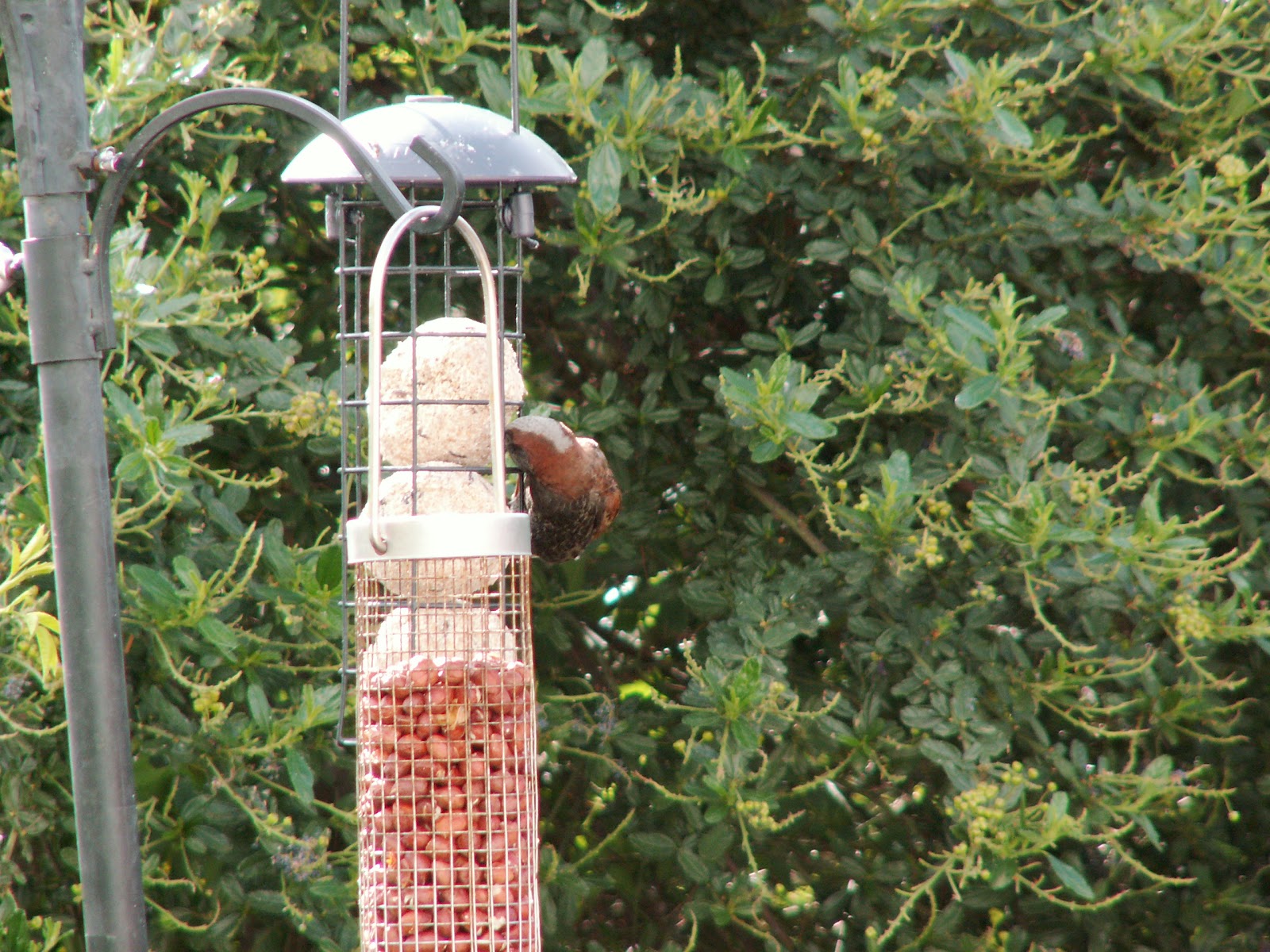
Urban birder Paul Davis sent me this selection of images taken of a weird bird that he could not recognise coming to his feeder in his Mitcham garden in south London.
At first I thought it was some strange escaped weaver species but closer examination, especially of its upperparts, left me thinking that it could be a melanistic male House Sparrow. Melanism is the opposite of albinoism and is rare in House Sparrows. In all my decades of watching them I have never seen a melanistic one, although I have seen albinoism and partial albinos. The grey patch on the crown of the depicted bird is totally consistant with that of a normal male House Sparrow. Furthermore, a search on the net resulted in me finding footage of another similarly plumaged bird on the continent. Paste http://www.youtube.com/watch?v=4NgENqvdGcY and see what you think.
So, is it a House Sparrow?
Let me know what you think.
Hidden photo
Have you ever had a situation when you’ve gone through a set of photographs and stumble across a gem?
This evening I was going through a cd of several hundred photos taken by David Fettes, the photographer I took with me to Taiwan last month when I noticed this one. He had inadvertently taken a shot of a Nordmann’s Greenshank. This wader is globally endangered with an estimated world population of no more than a thousand birds. Although they can be found wintering (or at least on migration) along the coastlines of southeast Asia, their breeding and wintering grounds are poorly known. They do winter on the coasts of Taiwan, so this bird was not wholly unexpected.
It was a nice surprise though!
It was nippy up north!
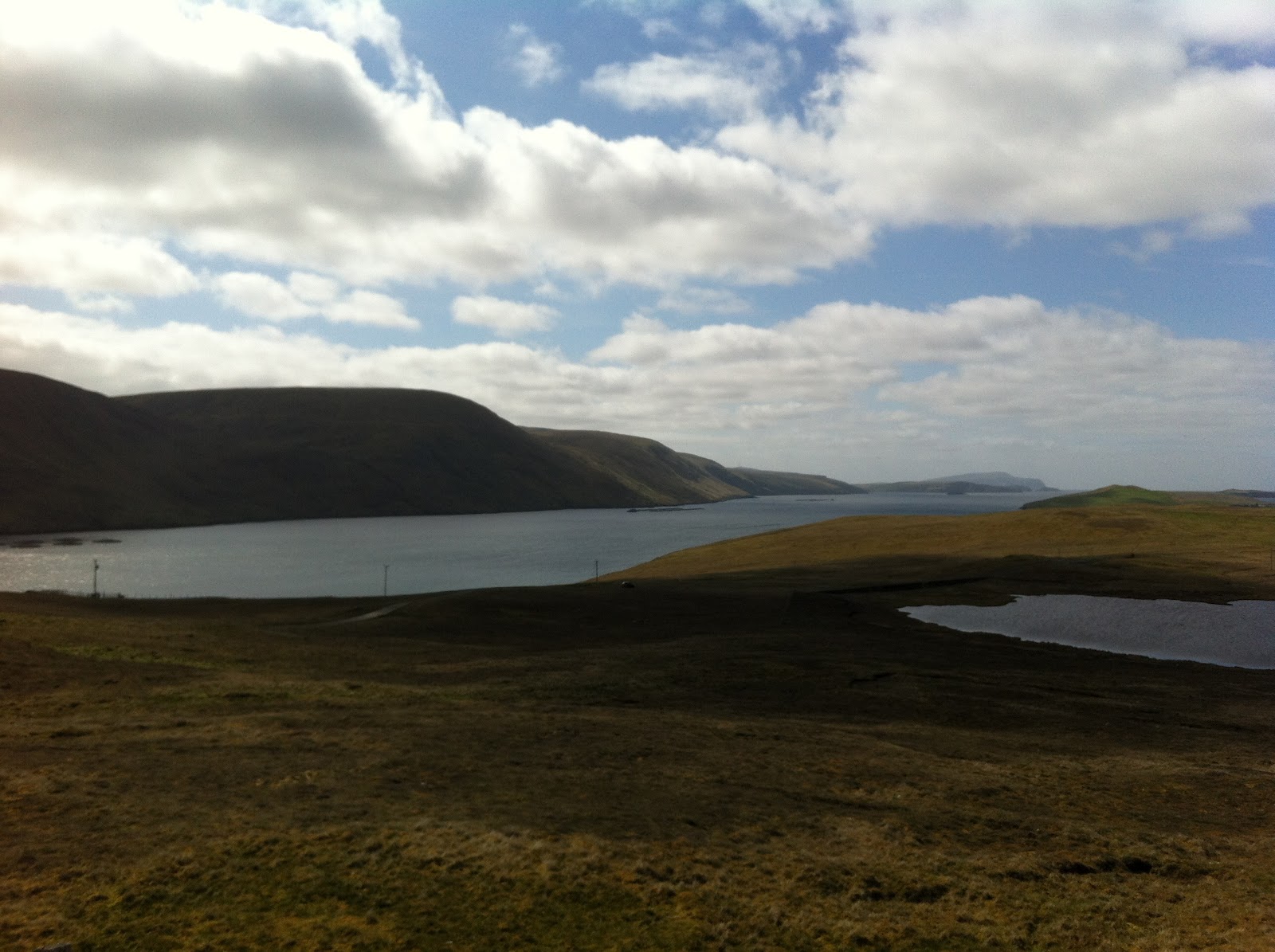
It has taken me two days to sufficiently warm up after a stupendous week on The Shetlands. I never really appreciated just how far north these islands were – literally just 200 miles east of Norway. Nor did I fully comprehend just how big the main island was – some 100 miles long by 30 miles wide, or something like that. But what I didn’t account for in any way was how cold it would be. Despite the sun shining on some of the days a merciless wind sometimes blew to duly freeze me. I had to resort to wearing two pairs of trousers, three t-shirts, a jumper, jean jacket and raincoat plus two pairs of hats and some gloves!!
During my week I visited Fetlar, Yell, Unst as well as circumnavigating the main island. I picked up all the usual suspects that you would expect to uncover on these magical isles including a single female Red-necked Phalarope, Puffins, Black & Common Guillemots, Razorbills, Kittiwakes, Great Black-backs, Common Gulls, Arctic Terns, one pair of Common Terns, Arctic Skuas, Bonxies, Greylags, Eiders, orgies of Shags, Great Northern & Red-throated Divers, Lapwings, Curlews, Whimbrels, Dunlins, Sanderlings, Ringed Plovers, Twites, Starlings, Hooded Crows and plenty of House Sparrows amongst other species.
Of course, The Shetlands are famed for the number of hot rarities that it attracts. Well, I managed to dip on a Yellow-billed Diver, Black-headed Bunting (which would have been my first in 25 years) and was turned the other way speaking on my mobile when an adult Long-tailed Skua flew past. But did manage to see a lingering Icterine Warbler and discover a Short-toed Lark along the road outside my hotel on Unst plus find and co-find two seperate female Golden Orioles above and around my wooded adopted local patch on Unst. Coupled with those discoveries I also enjoyed watching Shetland scarcities like Wood Pigeon, Hobby, Sparrowhawk, Carrion Crow and a Dunnock.
Every birder in the UK and beyond must come and visit these islands at least once in their birding lives. It’s like being a football fan and going to a big game at Wembley or going to Buck Palace and meeting the Queen. They are things that we just have to do.
My gratitute goes out to Shetland Wildlife for facilitating my visit and making me feel so welcome.
In transit….
I’m sitting here in an airport lounge at Aberdeen Airport on my way to Shetland – a mythical destination that I have never been to before but have always lusted after since my monstrous Dixon’s 10 x 50 wielding days. The sky is a glorious blue. Thank good that Aberdeen is also experiencing the recent tropical weather that the rest of Britain has been basking in.
A couple of days ago I spent an interesting afternoon at Wormwood Scrubs, my patch. The sun was beating down and seeing as I was to have a radio interview on site later in the afternoon I decided to spend an hour sitting on an anthill in the grassland scanning for passing raptors. Well, despite my best efforts I managed one Sparrowhawk, a couple of Cormorants and a host of Herring & Lesser Black-back Gulls. Scanning the grassland I noticed that a topless man was reclining in the grass around 200 yards away. This would have been fine had it not been that he had chosen to sunbath in the protected area for ground nesting birds. Riled I got up and started to approach the guy. But instead of making a direct beeline across the grassland and potentially disturbing the very birds that I was about to berate him about, I decided to take the long way round to him by using the path.
I must have walked 10 yards when I noticed a handsome male Northern Wheatear strolling away from me on the same path. What an absolutely gorgeous bird it was. My statistical mind started to whirr. Was this the latest bird ever at The Scrubs? I suddenly realised that it was. The previous latest was recorded on the 20th May 2008. I marvelled at its finery as it flew on top of a nearby Blackthorn. Time ran away with me. I suddenly remembered the reason for my ramble and simultaniously also realised that it was time to meet the reporter. The topless man got away with being topless in the wrong place.
But I’ll get him next time!